Fly Patterns
Essential patterns for the West's legendary trout rivers. From tiny Trico spinners to articulated streamers: the flies you need, organized by type and season.
Dry Flies(14)
Chubby Chernobyl
A modern foam attractor pattern that has become a Montana staple. Virtually unsinkable, the Chubby floats heavy nymph droppers and draws aggressive strikes from trout looking for a large, easy meal. Available in numerous colors. The Chubby Chernobyl represents the evolution of the foam hopper and stonefly genre. Its layered foam body creates a nearly indestructible fly that requires no floatant and rides high on even the roughest water. The rubber legs provide enticing movement, and the flash wing catches light in a way that grabs attention from trout holding deep. Whether tied in tan, purple, pink, or any other color, the Chubby simply produces fish. Montana guides have embraced the Chubby Chernobyl as their go-to dry-dropper indicator fly, and for good reason. It supports one or even two heavy nymphs without sinking, it is visible at long distances, and trout eat it with startling aggression. On the Madison, Yellowstone, and Gallatin rivers, more fish are likely caught with a Chubby on top than any other dry fly. Its effectiveness extends from early July through October, covering the heart of Montana's fishing season.
Deer Wing Alder
The Deer Wing Alder is a classic dry fly pattern designed to imitate adult alder flies and certain caddisfly species, particularly the zebra caddis. This traditional pattern features a deer hair wing that provides excellent flotation while creating a realistic silhouette of these important aquatic insects. The fly's simple construction belies its effectiveness during late spring and summer hatches when alder flies emerge near streamside vegetation. Alder flies (Sialis species) are megalopteran insects commonly found near slower-moving sections of trout streams, particularly areas with overhanging alders, willows, and other riparian vegetation. While not as well-known as mayflies or caddis, alder fly hatches can create periods of intense feeding activity. The adults are dark-bodied with mottled wings that fold tent-like over their backs, a profile the Deer Wing Alder captures perfectly. The pattern's versatility extends beyond alder fly imitation. Its dark body and tent-wing silhouette also make it an effective representation of certain caddisfly species, particularly the zebra caddis (Macrostemum) and some darker Hydropsyche species. This dual-purpose nature makes the Deer Wing Alder a valuable pattern throughout the summer months when multiple similar insects are active. The fly works particularly well on streams in the Pacific Northwest, including Oregon and Washington waters where alder flies are abundant. It's equally effective in Montana, Idaho, and Wyoming streams where similar dark-bodied caddis species hatch throughout summer. The deer hair wing's natural buoyancy allows the fly to float well even in turbulent pocket water and riffles where these insects are often found. Anglers fishing areas with overhanging vegetation should always carry several Deer Wing Alders in sizes 10-14.
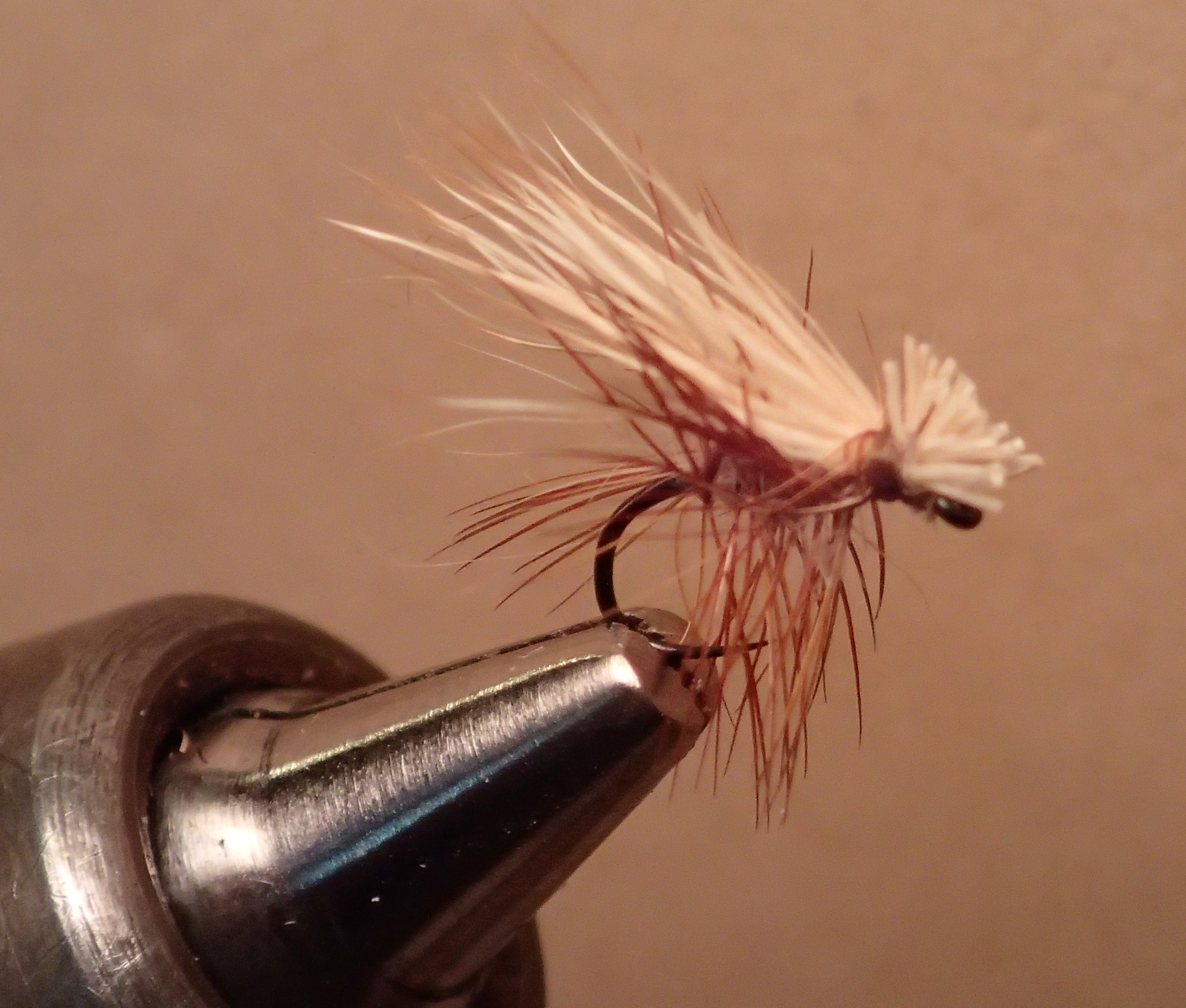
Elk Hair Caddis
Al Troth's iconic caddis imitation is a must-have on every Montana river. The elk hair wing provides excellent flotation, and the pattern effectively matches adult caddisflies throughout the season. Dead-drift, skate, or twitch it; all methods produce fish. The Elk Hair Caddis is one of those rare patterns that works from the moment caddisflies start appearing in spring through the last hatches of fall. The tent-shaped elk hair wing perfectly mimics the profile of a resting adult caddis, while the palmered hackle gives the fly exceptional buoyancy and creates the impression of legs touching the surface. Its durability is legendary; a well-tied Elk Hair Caddis can take dozens of fish before needing replacement. In Montana, caddis hatches are prolific on every major river. Mother's Day caddis hatches on the Yellowstone in late April and May are among the most anticipated events of the season. The Elk Hair Caddis is equally effective on the rock gardens of the Gallatin, the braided channels of the upper Madison, and the tailwater sections of the Missouri. Vary the body color between tan, olive, and green to match local populations.
Griffith's Gnat
The Griffith's Gnat is one of the most versatile and effective midge patterns ever created, and it remains a staple in fly boxes across North America. Designed by George Griffith in the 1960s, this simple yet ingenious pattern imitates a cluster of adult midges trapped in the surface film—a common occurrence during midge hatches when multiple insects become tangled together. What makes the Griffith's Gnat so effective is its dual representation. The peacock herl body provides the dark, segmented appearance of midge bodies, while the grizzly hackle palmered along the entire length creates the illusion of multiple insects clustered together. This hackle also provides crucial flotation, allowing the fly to ride high in the surface tension. When viewed from below, the pattern presents a convincing silhouette of struggling midges—an irresistible target for selective trout. Midges are available to trout year-round, but they become especially important during winter months when other aquatic insects are dormant. On spring creeks, tailwaters, and stillwaters, midge hatches can occur daily regardless of weather conditions. The Griffith's Gnat excels in these situations, particularly when fish are keying on clusters rather than individual insects. Size selection is critical—match the natural midges as closely as possible, which often means fishing sizes 20-24. The pattern is equally effective on moving water and stillwater. On rivers and streams, dead-drift the Griffith's Gnat through feeding lanes and along current seams. In lakes and ponds, allow it to sit motionless in the surface film, occasionally giving it a subtle twitch to imitate struggling insects. During heavy midge emergences, when trout become hyper-selective, the Griffith's Gnat often outperforms more complex patterns simply because it presents the clustered appearance fish are targeting. One of the pattern's greatest strengths is its versatility across seasons and water types. It works equally well on freestone streams, spring creeks, tailwaters, alpine lakes, and lowland reservoirs. The simple construction makes it easy to tie in large quantities, which is fortunate because these small flies are easily lost to fish, rocks, and overhanging vegetation. Many anglers tie Griffith's Gnats in various sizes and keep them readily accessible throughout the season.
Mercer's Flush Floater Foam Stone
Mercer's Flush Floater Foam Stone is a revolutionary dry fly pattern designed to imitate adult stoneflies, particularly salmonflies and golden stones during their brief but spectacular emergence periods. Created by Mike Mercer, this pattern solved a persistent problem that plagued traditional stonefly dry flies—how to create a pattern large enough and realistic enough to match the naturals while still floating reliably through turbulent water. Adult stoneflies are massive insects, with salmonflies reaching lengths of two inches or more. When they emerge in late spring and early summer, they crawl out onto streamside rocks and vegetation, where their exoskeletons split and adults emerge. These adults return to the water to lay eggs, often crash-landing on the surface, where they create a commotion that drives trout into a feeding frenzy. Traditional stonefly dries, tied with natural materials, often struggled to support their own weight and quickly became waterlogged. Mercer's innovation was incorporating closed-cell foam into the body construction. This foam provides unsinkable flotation while creating the chunky, segmented silhouette of adult stoneflies. The pattern rides flush in the surface film rather than high on the water, exactly matching how natural stoneflies appear when they land or oviposit. Rubber legs add lifelike movement, and the visible foam body makes the pattern easy to track in choppy water—a crucial advantage during the chaos of a stonefly hatch. The Flush Floater excels during the peak of stonefly emergences on classic western freestone rivers. Montana's Madison, Big Hole, and Clark Fork; Wyoming's Snake; Oregon's Deschutes; and Idaho's Henry's Fork all host impressive stonefly hatches where this pattern shines. The fishing can be explosive, with large trout rising aggressively to smash these big bugs on the surface. While primarily a late spring and summer pattern timed to stonefly emergences, the Flush Floater can also be effective as an attractor pattern throughout the summer. Its high visibility and large profile make it excellent for pocket water fishing, hopper-dropper rigs, and prospecting in fast, broken water where trout are accustomed to aggressive feeding.
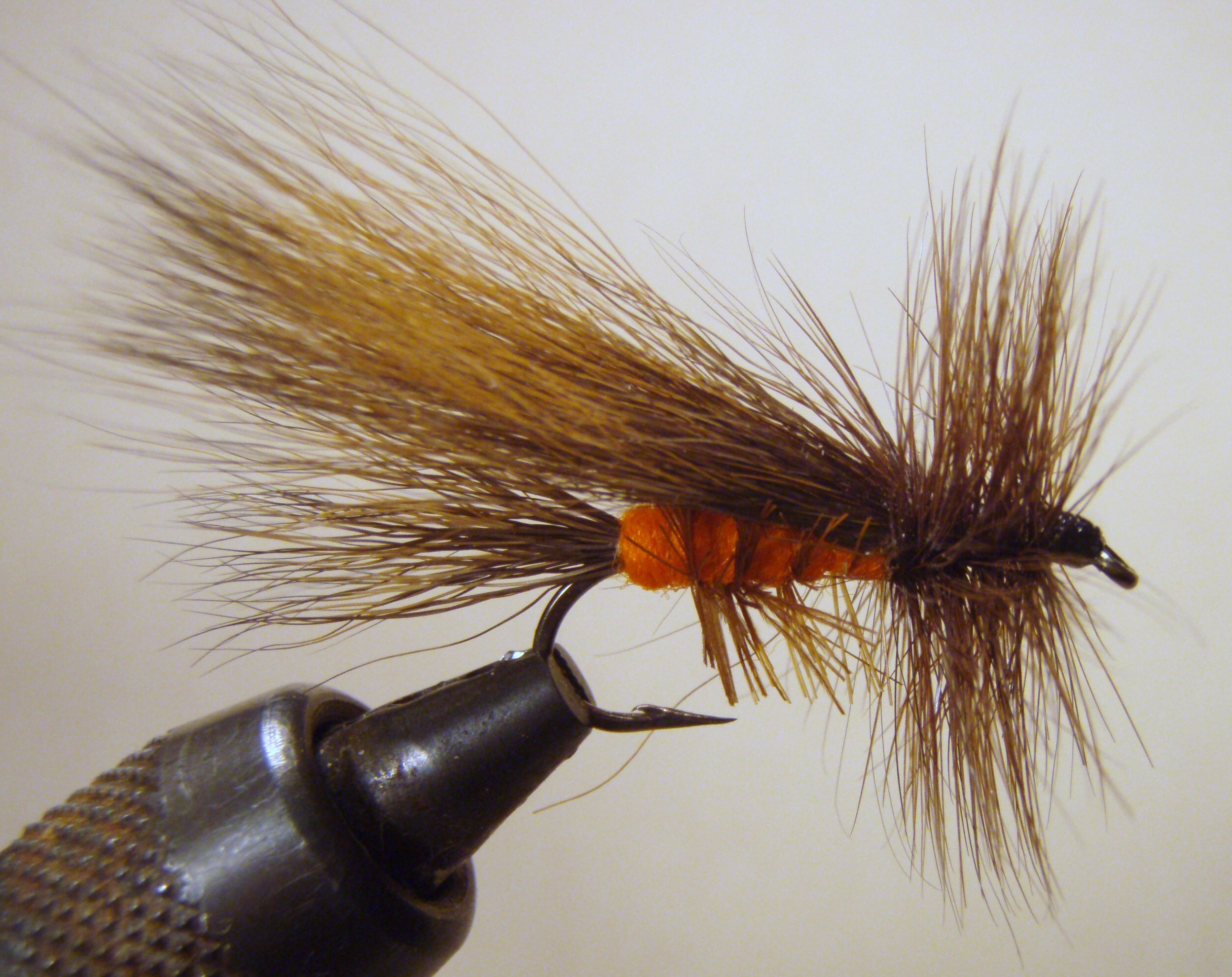
Norm Wood Special
A classic Montana salmonfly imitation. When the giant Pteronarcys stoneflies emerge in late June, trout gorge on these massive insects. The Norm Wood Special, fished along willowed banks, produces explosive strikes from the largest trout in the river. The Norm Wood Special is purpose-built for Montana's most anticipated hatch: the salmonfly emergence. These giant stoneflies, measuring up to three inches long, crawl out of the water onto streamside rocks and vegetation in late June and early July. When wind, clumsiness, or egg-laying brings them back to the river, trout respond with reckless abandon. The Norm Wood Special's orange-bodied, deer-hair-winged profile perfectly matches the natural, and its buoyant construction keeps it afloat in the heavy water where salmonflies are found. Fishing the salmonfly hatch is a uniquely Montana experience. The hatch progresses upstream over the course of several weeks, and finding the leading edge of the emergence is key. On the Madison River, the hatch typically starts near the Channels section in late June and works upstream toward the park. On the Yellowstone and Gallatin, similar progressions occur. When you find the hatch, the fishing can be extraordinary; trophy brown trout that normally feed deep on nymphs and baitfish throw caution to the wind and launch at these enormous dry flies with abandon.
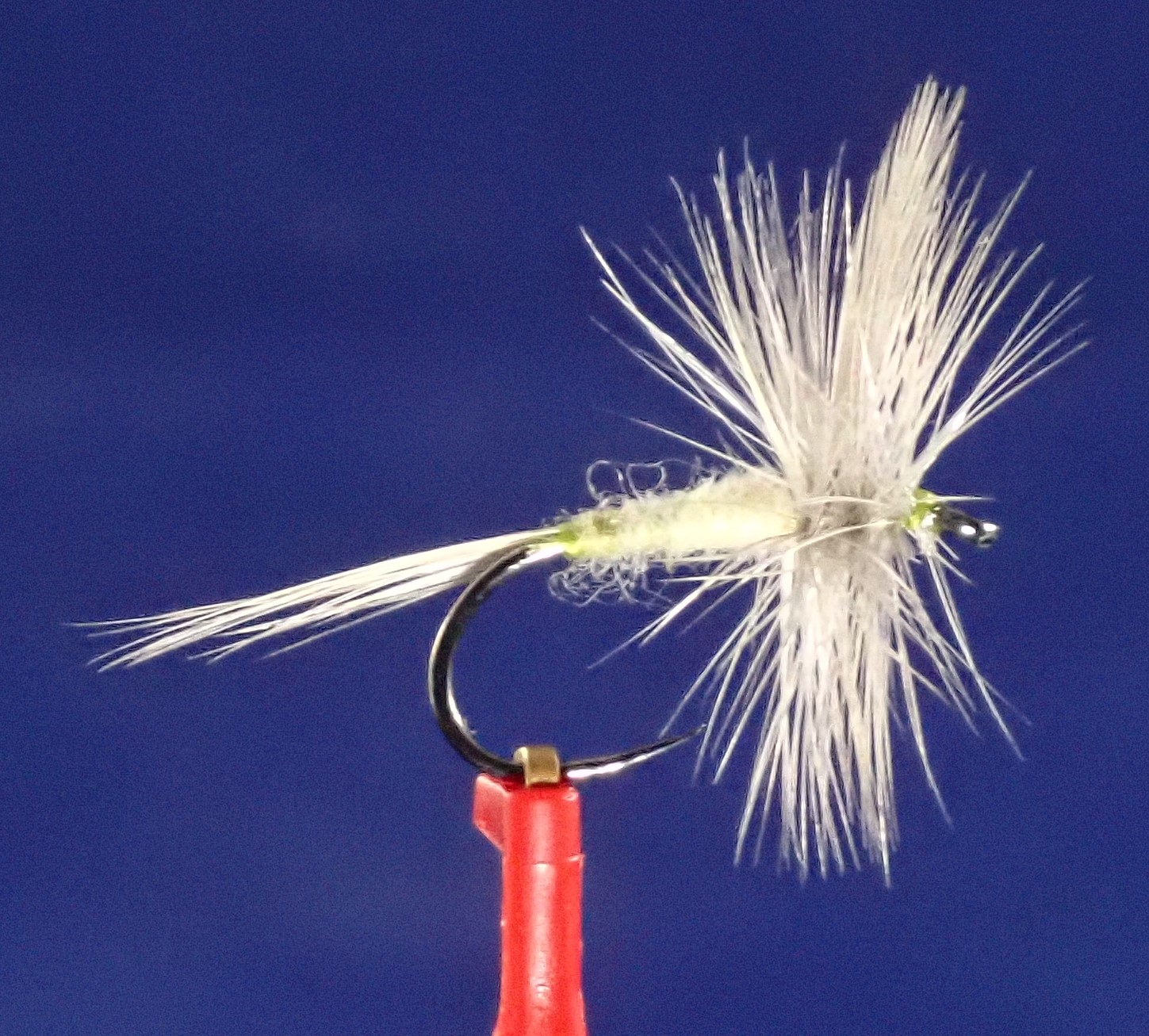
PMD Comparadun
A flush-floating mayfly imitation that excels during Pale Morning Dun hatches. The deer hair wing creates a realistic silhouette, and the pattern sits low in the film like a natural dun. Essential during PMD hatches on the Missouri and Madison. The Comparadun design is one of the most elegant solutions in dry fly fishing. By using a fan-shaped deer hair wing instead of traditional hackle, the fly sits directly on the water surface with its body in the film. This creates a silhouette that is nearly indistinguishable from a natural mayfly dun when viewed from below, exactly the perspective that matters to a feeding trout. The PMD version, tied in pale yellow and olive, is one of the most important patterns for Montana's prolific Pale Morning Dun hatches. PMD hatches on Montana's premier rivers are events that every serious fly angler should experience. On the Missouri River below Holter Dam, PMD hatches from late June through August produce some of the best dry fly fishing in North America. The Madison River's upper sections also host excellent PMD activity. During these hatches, trout can become excruciatingly selective, and the low-riding Comparadun is often the pattern that cracks the code when parachute and traditional dun patterns fail.
Pale Morning Dun Sparkle Dun
The Pale Morning Dun Sparkle Dun is an elegant and effective pattern designed to imitate adult Pale Morning Dun mayflies (Ephemerella species) during one of the most prolific and predictable hatches in western rivers. Developed by Craig Mathews and John Juracek, the Sparkle Dun series revolutionized mayfly dry fly design by incorporating realistic materials and a flush-floating profile that closely matches natural duns trapped in the surface film. Pale Morning Duns are medium-sized mayflies that emerge primarily during summer months on freestone streams, spring creeks, and tailwaters throughout the western United States. The insects range from pale yellow to olive, with delicate wings and three tails. Hatches typically occur mid-morning to early afternoon and can last for several hours, creating some of the most technical and rewarding dry fly fishing of the season. What distinguishes the Sparkle Dun from traditional Catskill-style dry flies is its low-riding profile and natural materials. Instead of stiff hackle that elevates the fly unnaturally above the water, the Sparkle Dun uses a deer hair wing and minimal to no hackle, allowing it to ride flush in the surface film exactly as natural mayflies do. The Antron trailing shuck suggests the nymphal case the insect is shedding during emergence, adding realism and often being the trigger that selective trout key on. The pattern excels on technical waters where trout are educated and selective. Spring creeks like the Henry's Fork, Montana's Armstrong and DePuy, and the San Juan River in New Mexico host prolific PMD hatches where the Sparkle Dun outperforms traditional patterns. It's also effective on freestone streams throughout the Rockies during summer PMD emergences. Presentation is critical when fishing this pattern. Use fine tippet (5X to 6X) and present the fly with a drag-free drift. Selective trout feeding on PMDs will refuse anything that doesn't ride naturally in the current. The low profile of the Sparkle Dun can make it difficult to see, so fish it in good light or use it as the trailing fly in a dry-dry rig behind a more visible pattern.
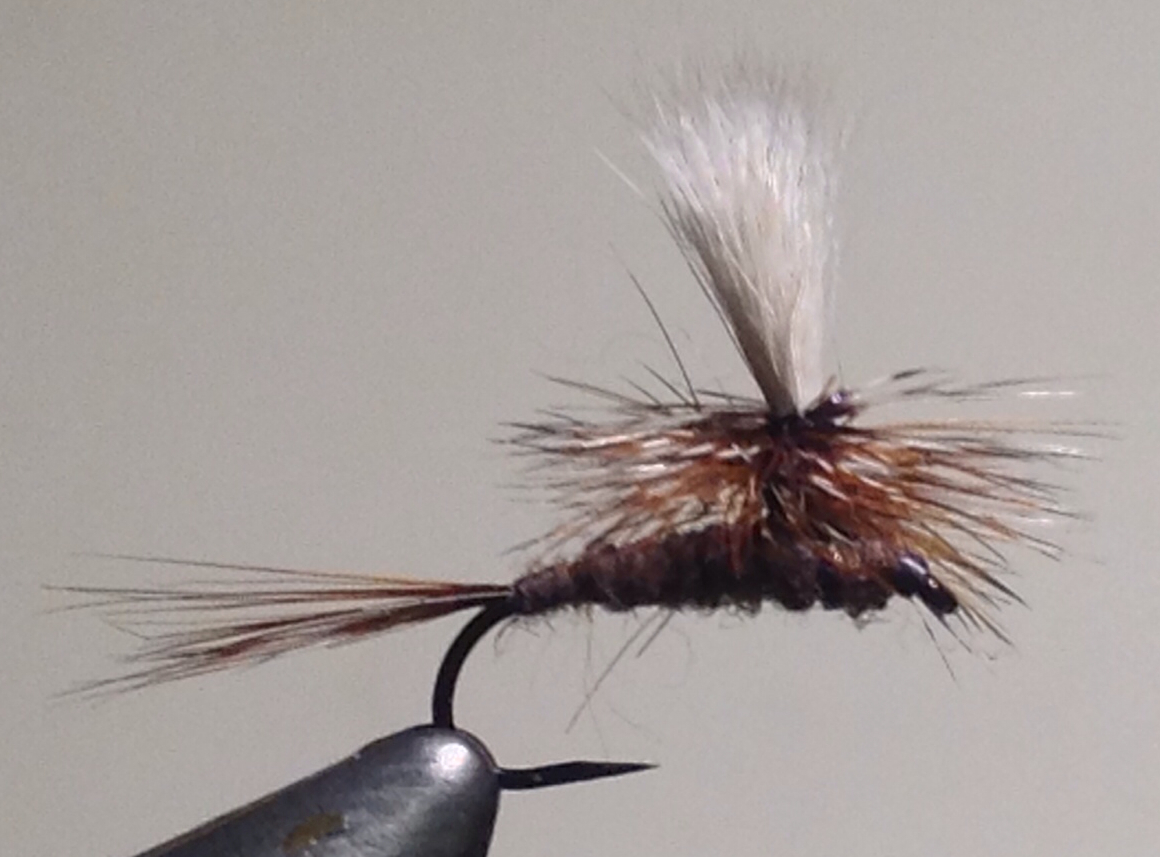
Parachute Adams
The most versatile dry fly ever created. The Parachute Adams imitates a wide range of mayflies and serves as an effective searching pattern when no specific hatch is occurring. The white parachute post makes it easy to track on the water. Originally tied with conventional upright wings, the parachute version wraps the hackle horizontally around the post, allowing the fly to land flush on the surface with a more realistic silhouette. This low-riding profile is why many experienced anglers prefer it over the standard Adams. The mixed brown and grizzly hackle suggests the mottled coloring of countless mayfly species, from tiny Baetis to larger Callibaetis. On Montana waters, the Parachute Adams is the quintessential searching pattern. When you arrive at the river and nothing is hatching, tie on a Parachute Adams in size #14 or #16 and start prospecting. During active hatches, sizing down to match the naturals makes this fly deadly. It works on every Montana river from the riffles of the Madison to the spring creek-like waters of the Missouri below Holter Dam.
Purple Haze
A Montana-born variation of the Parachute Adams with purple dubbing. Created in the Gallatin Valley, this pattern has become a regional favorite that outperforms the standard Adams on many days, particularly during BWO and PMD hatches. The Purple Haze takes the proven Parachute Adams template and adds a subtle twist: a body of purple dubbing that seems to trigger something in trout that the standard gray does not. While purists may argue the color is unnatural, the results speak for themselves. Montana anglers have reported for years that the Purple Haze consistently outfishes the standard Adams, particularly on rivers that receive heavy fishing pressure. Theories about why the purple works vary. Some believe that the color more accurately represents the UV spectrum reflected by natural mayflies. Others suggest that the slightly different hue simply stands out enough on pressured water to be noticed without being refused. Whatever the reason, the Purple Haze has earned its place in the top tier of Montana dry flies. It is especially effective on the Gallatin, Madison, and Yellowstone rivers from late spring through early fall.
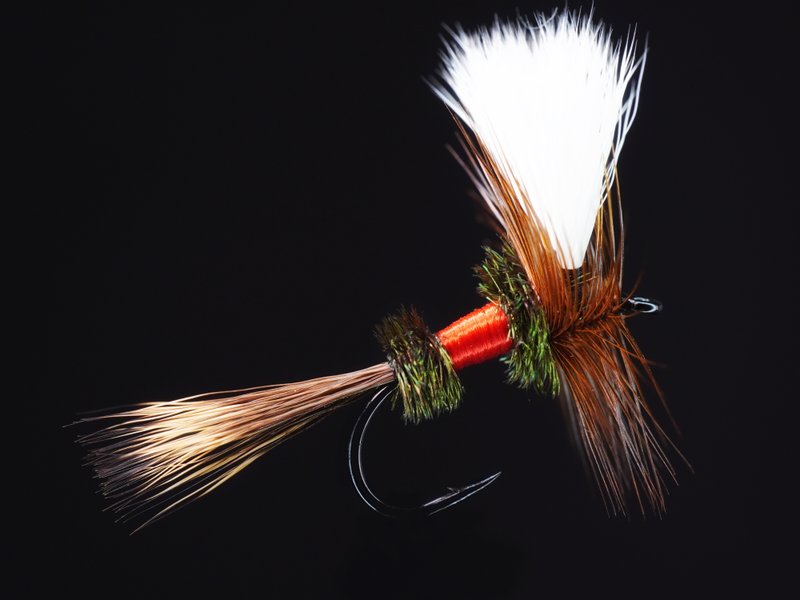
Royal Wulff
The Royal Wulff stands as one of fly fishing's most iconic and recognizable attractor dry flies, featuring a distinctive red floss body, white calf tail wings, and peacock herl shoulder and tail. Created by legendary fly tier Lee Wulff in the 1930s, this pattern revolutionized dry fly fishing by demonstrating that high-floating, visible flies could outfish traditional imitative patterns in many situations. The Royal Wulff's bold design makes it visible to both anglers and fish in broken water, while its buoyant construction keeps it riding high through turbulent currents. As an attractor pattern, the Royal Wulff doesn't imitate any specific insect but rather suggests the general size and silhouette of various mayflies and caddis. The bright red floss body provides a strike trigger that fish can see from a distance, while the peacock herl adds an iridescent quality that mimics the natural sheen of many aquatic insects. The white calf tail wings stand upright like a classic mayfly, creating a silhouette that trout recognize as food even when they're not feeding on a specific hatch. This fly excels in pocket water, riffles, and runs where broken surface conditions make precise imitations difficult for fish to inspect closely. It's particularly effective on freestone rivers with bouldery structure and fast currents, where trout must make quick decisions about whether to strike. The Royal Wulff's high visibility helps anglers track the fly through complex currents and heavy chop, while its buoyant design keeps it floating even after multiple catches or dunkings. The pattern works throughout the summer and fall seasons when terrestrial insects and various mayflies are active. It's especially deadly during grasshopper season, when its size and profile suggest a meaty meal worth rising for. Many experienced anglers use the Royal Wulff as a searching pattern, covering water methodically until they locate feeding fish or determine what insects are active. Its versatility makes it equally effective on mountain streams, medium-sized rivers, and even some larger waters when conditions are right.
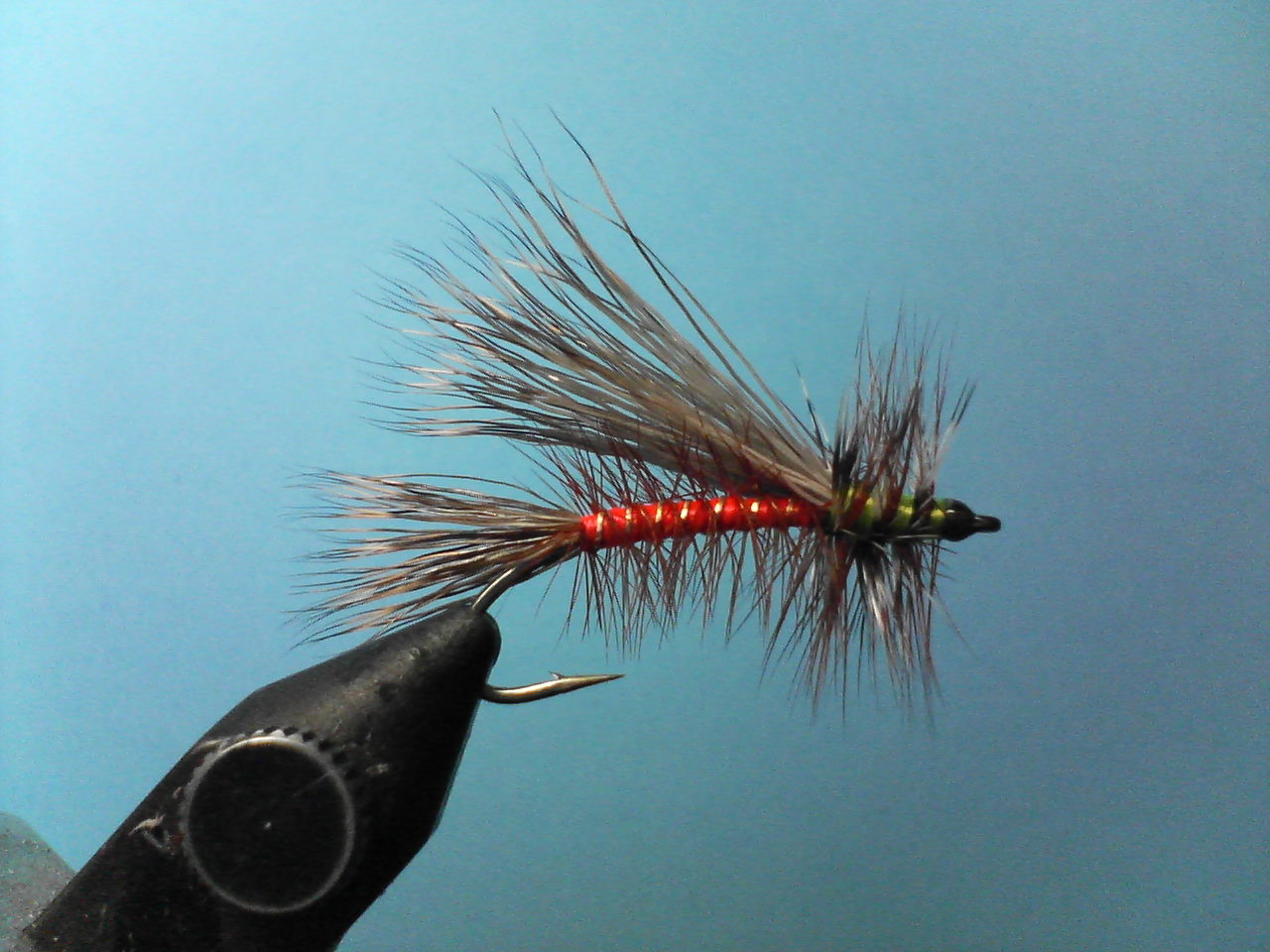
Stimulator
An outstanding attractor dry fly and stonefly imitation. The Stimulator excels as a top fly in a dry-dropper rig. Larger sizes (#6-8) match salmonflies and golden stones, while smaller sizes (#12-14) suggest various stoneflies and caddis. The Stimulator's genius lies in its buoyancy and suggestive profile. The combination of a heavily palmered hackle, elk hair wing, and robust body allows it to ride high on turbulent water where lesser flies would drown. The swept-back wing silhouette works as both a stonefly and large caddis imitation, making it effective even when no specific insect is hatching. Trout see the Stimulator and recognize it as a substantial, calorie-rich meal worth rising for. In Montana, the Stimulator truly shines during stonefly season on the Madison, Yellowstone, and Gallatin rivers. Tie on a size #6 orange Stimulator during the salmonfly hatch in late June and fish it tight to the banks. As summer progresses, switch to smaller sizes in yellow for golden stones. The Stimulator also serves as an excellent indicator fly for a heavy nymph dropper, especially when wading pocket water and riffles where it can be challenging to track a strike indicator.
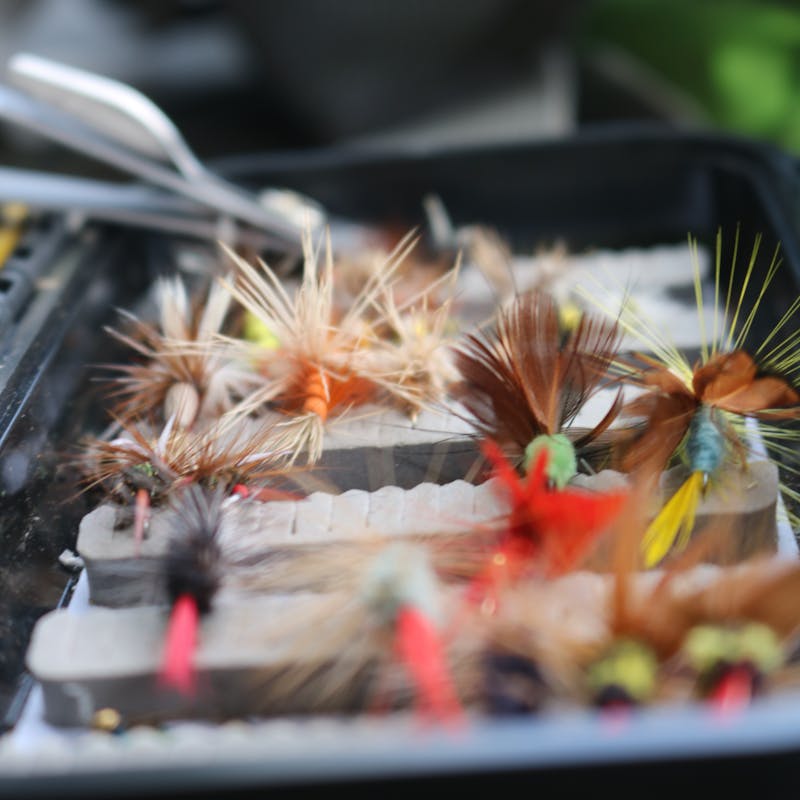
Trico Spinner
A tiny (#18-22) spent-wing pattern that imitates the Tricorythodes spinner fall. Trico mornings on the Missouri River are legendary, with pods of rising trout slurping tiny spinners from the surface. Requires fine tippet and precise presentation. The Trico spinner fall is one of fly fishing's most challenging and rewarding experiences. Each morning from mid-July through September, clouds of tiny Tricorythodes mayflies mate, the females deposit their eggs, and both sexes fall spent on the water with wings outstretched. Trout line up in feeding lanes and sip these minute insects with metronomic regularity. The Trico Spinner, with its splayed hackle-fiber or poly-yarn wings and tiny thread body, is the pattern purpose-built for this event. The challenge of Trico fishing is twofold: the flies are tiny, and the trout are selective. On the Missouri River, trout feeding during Trico spinner falls routinely refuse flies that are a single hook size off, that drag even slightly, or that have a wing profile that does not match the naturals. This is technical dry fly fishing at its finest, demanding long leaders, fine tippets, precise casting, and patience. The reward is steady surface action with large, well-conditioned trout.
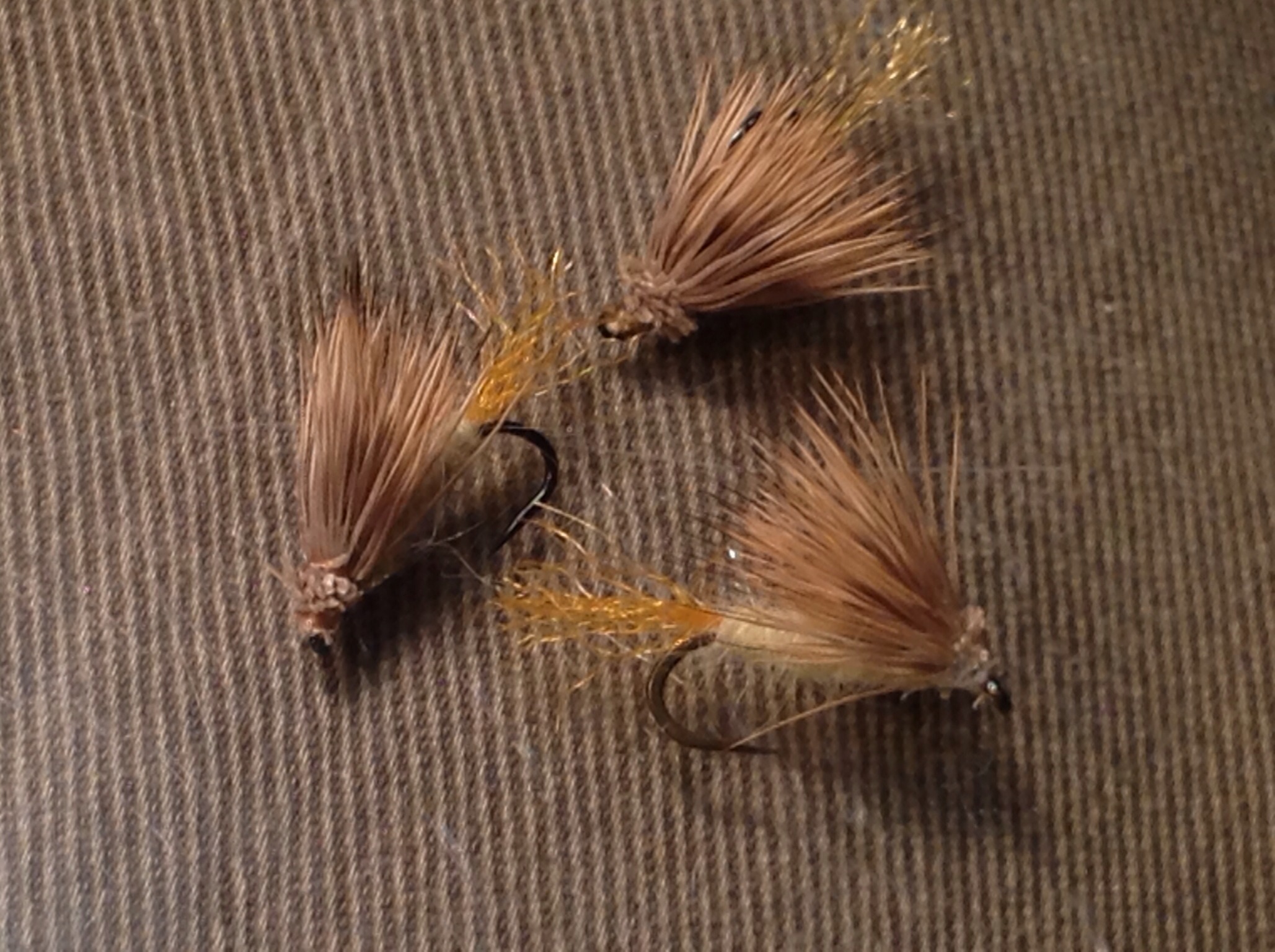
X-Caddis
Craig Mathews' brilliant caddis emerger pattern sits in the surface film, imitating a caddis struggling to break through the meniscus. Deadly during caddis hatches when fish refuse higher-riding patterns. The trailing shuck is key to its effectiveness. The X-Caddis fills a critical gap in the caddis life cycle that most fly boxes lack. While traditional dry flies like the Elk Hair Caddis ride high on the surface, the X-Caddis sits flush in the film with its body partially submerged and a trailing Z-lon shuck extending behind. This precisely imitates the moment when a caddis pupa breaks through the surface and begins to shed its pupal shuck, the most vulnerable stage for the insect and the moment when trout feed with the least caution. On Montana's caddis-rich rivers, the X-Caddis can make the difference between a frustrating day of refusals and a banner day of steady action. When you see trout rising during a caddis hatch but refusing your Elk Hair Caddis, the X-Caddis is the answer. It is particularly effective on the Yellowstone during the Mother's Day caddis hatch, on the Madison during summer evening hatches, and anywhere trout have become educated to conventional caddis patterns.
Nymphs(29)
Annelid (San Juan Annelid)
The San Juan Annelid is a deceptively simple yet devastatingly effective nymph pattern that imitates aquatic worms, particularly Tubifex worms found in nutrient-rich tailwaters. Originally developed on New Mexico's San Juan River, this fly has become a staple pattern in tailwater fisheries across the western United States, where these small red worms constitute a major food source for trout. What makes the Annelid so effective is its ability to mimic the undulating, natural movement of aquatic worms in the current. Unlike many nymph patterns that rely on rigid materials, the Annelid's soft Ultra Chenille or vernille body creates lifelike motion even in slow currents. Trout feeding on worms exhibit a distinctive feeding behavior, often holding in soft water and selectively picking off individual worms drifting past, making dead-drift presentations with this fly particularly productive. The pattern excels in tailwater environments where stable flows and consistent temperatures allow aquatic worm populations to thrive year-round. Rivers like the San Juan, Green River in Utah, Bighorn in Montana, and the South Platte in Colorado see tremendous success with this pattern. It's especially effective during low light conditions, winter months when other aquatic insects are less active, and periods following high flows that dislodge worms from the substrate. Anglers should fish the Annelid deep, often as part of a two-fly nymph rig where it serves as the point fly beneath a larger attractor pattern. The micro sizes (18-24) can be challenging to see, so using a sensitive strike indicator or tight-line nymphing techniques is essential. The fly is most productive when bounced along the bottom in the strike zone, imitating a worm tumbling naturally in the current. While red is the classic color, variations in pink, brown, and maroon can be effective depending on local worm populations.
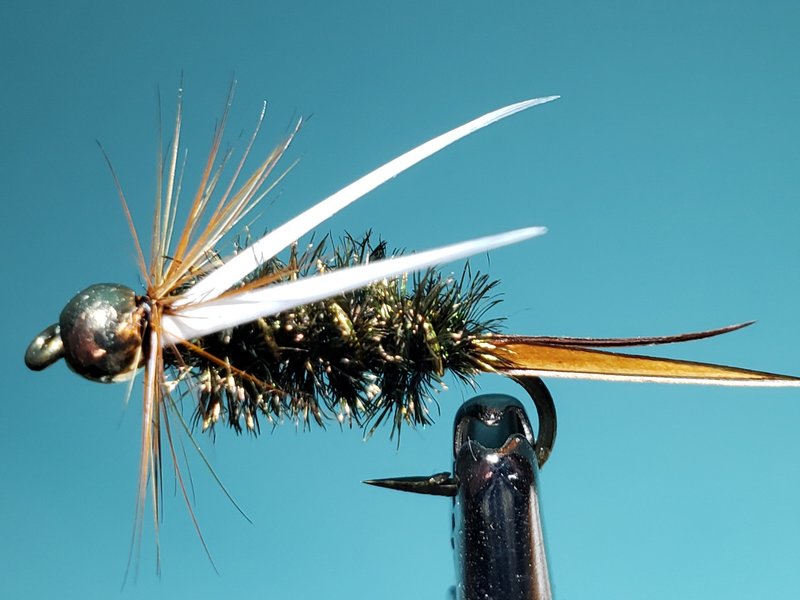
Bead Head Prince Nymph
The Bead Head Prince Nymph is one of fly fishing's most versatile and productive attractor nymphs, combining the proven fish-catching qualities of the classic Prince Nymph with the added weight and flash of a brass or tungsten bead. This pattern doesn't imitate any specific insect, but rather suggests multiple food forms—stonefly nymphs, mayfly nymphs, and even small baitfish—making it effective across diverse water types and conditions. What distinguishes the Bead Head Prince from other nymphs is its bold appearance and multi-element construction. The peacock herl body provides iridescence that catches light underwater, while white biots or goose feathers create a distinctive split tail and wing case that fish seem to find irresistible. The soft hackle legs add lifelike movement in the current, and the bead head ensures the fly sinks quickly into the strike zone while adding an attractor flash point. This pattern excels as an anchor fly in two-nymph rigs, where its weight helps turn over the leader and presents a smaller trailing fly at the proper depth. It's equally effective fished solo in pocket water, riffles, and runs where trout hold near the bottom. The Prince produces year-round, but particularly shines during spring stonefly emergences and throughout summer when trout are actively feeding on a variety of subsurface food forms. Anglers fishing the Bead Head Prince should employ standard nymphing techniques—dead drift with occasional short strips or lifts to imitate a swimming insect. The fly works in rivers from Montana's Madison to Pennsylvania's Yellow Breeches, from small mountain streams to large western freestones. Size selection matters: #12-14 for aggressive prospecting and high water, #14-16 for more selective trout or clearer conditions.
Bird's Nest
The Bird's Nest is a wonderfully scruffy, buggy-looking nymph pattern that has been fooling selective trout for over six decades. Named for its resemblance to a disheveled bird's nest, this unassuming pattern effectively imitates caddis pupae and various mayfly nymphs through its soft, translucent body and wispy hackle fibers that undulate naturally in the current. What makes the Bird's Nest so effective is its lifelike appearance underwater. The copper wire body creates both weight and a subtle flash that catches attention without alarming wary trout, while the hare's ear dubbing thorax provides a mottled, natural texture with guard hairs that suggest legs and gills. The soft hackle or dubbing fibers picked out around the thorax create the illusion of movement even in gentle currents, triggering strikes from trout that might refuse more rigid patterns. This pattern excels in freestone rivers and streams with active caddis populations, particularly during caddis emergences when pupae are swimming toward the surface. However, its general suggestive profile also produces results when fished as a searching pattern in runs, riffles, and pocket water. The Bird's Nest has proven itself from the spring creeks of Pennsylvania to the freestone rivers of Montana and Colorado, working equally well in tailwaters and mountain streams. The Bird's Nest should be fished deep using standard nymphing techniques, though it can also be deadly when swung on a tight line at the end of a drift, imitating an emerging caddis pupa. Many anglers fish it as a dropper below a larger dry fly or nymph. The pattern's subtle coloration—copper, tan, and brown—matches a wide range of natural insects, making it an excellent choice when you're uncertain what trout are feeding on.
Blue-Winged Olive (Baetis Nymph)
The Blue-Winged Olive (BWO) Baetis nymph is one of the most important imitations in any trout angler's fly box. Baetis mayflies are ubiquitous across North American trout streams, emerging throughout much of the year but particularly abundant during spring and fall. These small mayflies often hatch on overcast, drizzly days when other insects are absent, providing crucial feeding opportunities for trout when conditions seem least promising. Baetis nymphs are small, slender, and olive-brown in coloration, with three tails and prominent wing pads. They inhabit a variety of stream environments, from fast riffles to slower pools, and are active swimmers that move frequently between rocks and vegetation. Trout key on these nymphs year-round, making accurate imitations essential for consistent success, especially when targeting selective fish in clear, slow water. The effectiveness of a Baetis nymph pattern depends on matching the small size and slender profile of the natural. Most productive patterns range from #18-22, with #20 being perhaps the most universally useful size. The pattern should be fished dead-drift near the bottom in the hours before a hatch, then gradually higher in the water column as nymphs begin ascending toward the surface to emerge. This pattern excels in spring creeks, tailwaters, and freestone rivers with consistent flows. It's particularly deadly during the transitional phases of a BWO hatch when trout are feeding subsurface on ascending nymphs. Many anglers fish it as part of a two-fly rig, paired with a larger attractor nymph or suspended below a dry fly as a dropper. The small size requires fine tippets (6X-7X) and delicate presentations for maximum effectiveness.
Caddis Larva (Green/Tan)
The Caddis Larva is an essential imitation of one of the most abundant food sources in trout streams across North America. Caddisfly larvae inhabit virtually every river, stream, and lake, with some species building protective cases from sand and debris while others, like Rhyacophila and Brachycentrus, are free-living predators that roam the stream bottom. These soft-bodied larvae are available to trout year-round, making accurate imitations valuable in every season. Green and tan are the two most common color variations, representing different caddis species and their dietary preferences. Green larvae (often Rhyacophila) are typically found in faster water and feed on other aquatic insects and organic matter. Tan or cream-colored larvae (often Brachycentrus or Hydropsyche) are frequently encountered in moderate currents and feed primarily on algae and detritus. Having both colors in your box ensures you can match the predominant species in any given stream. Caddis larvae patterns excel when fished deep along the stream bottom, particularly in the riffle-run transitions where these insects naturally occur. Unlike mayfly nymphs that might drift passively, caddis larvae presentations should occasionally include short twitches or lifts to imitate the natural's active movements. The pattern is especially effective during caddis emergences when adult activity signals that larvae are abundant, but it produces year-round as a searching pattern. This pattern works across all water types but particularly shines in freestone rivers with rocky substrates where caddis populations thrive. From the Green River in Utah to the Housatonic in Connecticut, rivers with healthy caddis populations see excellent results with properly fished larva patterns. The simple profile and soft materials create natural movement that even selective trout find difficult to refuse.
Chironomid (Bomber)
The Chironomid Bomber is a highly effective stillwater pattern that imitates midge pupae—arguably the most important food source for trout in lakes, reservoirs, and slow-moving river sections. Chironomids (non-biting midges) are present in tremendous numbers in most stillwaters, and trout feed on them throughout the year, making accurate imitations essential for consistent success. While midges are also important in rivers, the Bomber style was specifically developed for lake fishing techniques. The 'Bomber' name comes from the pattern's distinctive appearance with prominent wing buds or wing pads that suggest a pupa ready to emerge. The pupal stage is when chironomids are most vulnerable and available to feeding trout, as they must suspend in the water column and eventually break through the surface film to complete their transformation into adults. Trout key on these helpless, protein-rich morsels with laser-like focus, often feeding exclusively on chironomids to the exclusion of all other food. What makes the Chironomid Bomber deadly is its realistic profile and the ability to fish it at precise depths using a strike indicator. The pattern features a slender, segmented body with prominent white or cream-colored gills or breathing filaments near the head, and wing buds that catch light and suggest life. When suspended motionless at the depth where trout are feeding—often revealed by electronic fish finders or observed rises—the pattern is incredibly effective. This pattern excels in Western stillwaters from British Columbia to California, particularly in lakes with clear water and abundant chironomid populations. Fishing techniques involve suspending the fly at a specific depth beneath an indicator and allowing it to hang motionless or with minimal movement. Patience is essential—strikes can be subtle, and the angler must resist the urge to move the fly. The Bomber works year-round but is especially productive during spring and fall when chironomid emergences are most prolific.
Damselfly Nymph
The Damselfly Nymph is a critical stillwater pattern that imitates one of the largest and most important food sources for lake-dwelling trout. Damselfly nymphs are aggressive aquatic predators that live among weeds and vegetation for up to two years before emerging as adults. When mature nymphs begin their migration toward shore to emerge, trout feed on them with reckless abandon, creating some of the most exciting stillwater fishing opportunities of the year. Damselfly nymphs are distinctive in appearance: elongated bodies, prominent eyes, three feathery tail gills, and six long legs. They swim with a distinctive undulating motion, propelling themselves through the water with side-to-side movements of their abdomen and tail. Effective patterns must capture this slender profile and suggest the lifelike movement that triggers aggressive strikes from cruising trout. The magic moment for damselfly nymph fishing occurs during spring and early summer emergences, typically May through July depending on latitude and elevation. During these periods, mature nymphs leave their weedy habitat and swim toward shore or emergent vegetation to climb out and transform into adults. This migration creates a feeding frenzy, with trout patrolling weed edges and shorelines to intercept the vulnerable nymphs. The fishing can be visual and exciting, with large trout actively cruising in shallow water. While damselflies are primarily a stillwater insect, they also inhabit slow-moving river sections, sloughs, and spring creeks with abundant vegetation. The pattern excels in Western lakes from Washington to California, though damselfly populations exist in suitable habitat throughout North America. Fishing techniques emphasize slow, steady retrieves with occasional pauses, imitating the swimming motion of naturals. Floating or intermediate lines work best, allowing anglers to fish the pattern through different depth zones.
Dark Golden Stonefly Nymph
The Dark Golden Stonefly Nymph imitates one of the most important large aquatic insects in western freestone rivers. Golden stoneflies (family Perlidae) are substantial insects that spend 2-3 years in their nymphal form, living among the rocks and cobble of fast-flowing streams. These powerful nymphs can reach sizes up to two inches long, providing a substantial meal that large trout actively seek, particularly as emergence approaches in late spring and summer. Golden stonefly nymphs are aggressive predators that feed on smaller aquatic insects and organic matter. Their dark brown to amber coloration with distinctive banding and robust build makes them easily recognizable. Unlike smaller mayfly or caddis nymphs, these hefty insects provide significant protein, and trout expend considerable energy to capture them. When golden stones are active—either drifting naturally during periods of high water or migrating toward shore before emergence—trout feed on them opportunistically throughout the water column. The Dark Golden Stonefly Nymph pattern excels during the weeks leading up to adult emergence, typically May through July in most western rivers, though timing varies with elevation and latitude. During this period, nymphs become increasingly active, moving from deep water toward the banks where they will crawl out on rocks or vegetation to emerge. Anglers fishing stonefly nymph patterns during these pre-emergence periods often experience their best days of the season, with aggressive takes from large, feeding trout. This pattern is essential in classic western stonefly rivers—the Madison, Yellowstone, and Gallatin in Montana, the Green and Provo in Utah, the Deschutes in Oregon, and freestone rivers throughout Colorado, Wyoming, and Idaho. It should be fished deep with split shot or weighted flies, dead-drifted along the bottom through runs, riffles, and pocket water. The large profile and dark coloration make it visible to trout even in off-color or turbulent water.
Dragonfly Nymph
Dragonfly nymphs represent some of the largest and most protein-rich prey items available to trout in stillwaters and slower river sections. These fierce aquatic predators can live underwater for 1-3 years before emerging as adults, growing to impressive sizes that make them irresistible targets for trophy trout. A well-tied Dragonfly Nymph pattern is essential for anglers targeting large fish in lakes, ponds, and the slower pools of rivers. The natural dragonfly nymph is a formidable creature with a robust, segmented abdomen, powerful legs, and distinctive large eyes. Different species vary in color from olive and brown to dark green and black, allowing trout anglers to match local populations. The nymphs are active crawlers and swimmers, moving along weed beds, rocky bottoms, and submerged vegetation as they hunt for smaller aquatic insects, small fish, and tadpoles. Dragonfly Nymph patterns are typically tied on larger hooks (sizes 6-10) to match the substantial size of mature nymphs. The fly should be fished slowly near the bottom using a full-sinking or sink-tip line, with occasional short strips to imitate the nymph's swimming motion. Pay particular attention to weed edges, drop-offs, and areas with submerged structure where dragonflies hunt. While dragonfly nymphs are present year-round, they become particularly important during summer months when nymphs migrate toward shore and shallower water in preparation for emergence. This migration triggers aggressive feeding from trout, bass, and panfish. Lakes and reservoirs throughout the western states, including Montana, Wyoming, Idaho, Oregon, Washington, and California, see excellent dragonfly nymph fishing. The pattern also works well in beaver ponds, spring creeks, and slower river pools where dragonflies colonize.
Flashback Pheasant Tail
The Flashback Pheasant Tail is a modern variation of Frank Sawyer's classic Pheasant Tail Nymph, enhanced with a pearlescent flashback over the thorax to add attraction and suggest the gas bubble trapped beneath a natural mayfly nymph's wing case. This simple addition transforms an already effective pattern into an even more versatile and visible subsurface offering. The flashback catches light underwater, helping trout locate the fly in broken water, deeper runs, or low-light conditions. Like its traditional predecessor, the Flashback Pheasant Tail imitates a wide variety of mayfly nymphs, including Baetis (Blue-Winged Olives), Pale Morning Duns, and smaller Callibaetis species. The pheasant tail fibers create a naturally segmented, translucent body that closely matches the appearance of living mayfly nymphs. The added flashback material—typically pearl or opal tinsel—represents the reflective gas bubble that forms beneath the wing case as nymphs prepare to emerge. This pattern excels in tailwaters, spring creeks, and freestone rivers throughout the trout fishing season. It's particularly effective during mayfly emergences when ascending nymphs swim toward the surface, but works equally well as a searching pattern when dead-drifted along the bottom. The fly can be fished unweighted in shallow water or weighted with a bead head or wire underbody for deeper presentations. The Flashback Pheasant Tail has proven effective across all major trout waters in the United States. From Montana's spring creeks to Colorado's tailwaters, Wyoming's freestone streams to California's Sierra rivers, this pattern consistently produces. Its subtle flash adds just enough attraction without appearing garish or unnatural to educated trout. Sizes 14-18 cover most situations, though smaller patterns down to size 20 can be effective during tiny Baetis hatches.
Girdle Bug
The Girdle Bug is a burly, rubber-legged stonefly nymph pattern designed to imitate the massive Salmonfly and Golden Stone nymphs that inhabit western freestone rivers. This heavily-weighted pattern features long rubber legs and a chunky chenille body that creates an unmistakable silhouette of these important aquatic insects. The Girdle Bug's substantial size and profile make it ideal for targeting large trout that aggressively feed on these protein-rich nymphs. Stonefly nymphs, particularly the large Pteronarcys (Salmonfly) and Calineuria (Golden Stone) species, can reach lengths of 2-3 inches and live in rivers for 2-4 years before emerging. These hefty nymphs crawl along rocky bottoms, making them available to trout year-round, though they become especially important in spring when mature nymphs migrate toward shore in preparation for emergence. A Girdle Bug drifted along the bottom can trigger explosive strikes from trophy trout. The pattern's design emphasizes durability and fishability. The rubber legs provide lifelike movement even at rest, the chenille body creates bulk and visibility, and substantial weight (either from lead wire or a bead head) gets the fly down quickly into the strike zone. The color variations—black for Salmonflies, golden-brown for Golden Stones—allow anglers to match the predominant species in their local waters. Girdle Bug is essential on classic Western stonefly rivers including Montana's Big Hole and Madison, Wyoming's Snake and Green Rivers, Colorado's Roaring Fork and Gunnison, Idaho's Henry's Fork and Salmon River, and Oregon's Deschutes. The pattern also works well in California's Sierra streams, New Mexico's high country rivers, and anywhere large stoneflies are present. Fish it deep through boulder-strewn runs, pocket water, and along undercut banks using a dead drift with occasional lifts to imitate the nymph's swimming motion.
Green Caddis Larva
The Green Caddis Larva imitates one of the most abundant and important food sources in trout streams: the larval stage of free-living caddisflies, particularly the bright green Rhyacophila species. Unlike case-building caddis that construct protective shelters from sand and debris, free-living caddis larvae crawl actively along stream bottoms, making them highly available to feeding trout. Their distinctive bright green coloration makes them easily recognizable and highly sought after by trout. Rhyacophila caddis larvae are predatory insects that hunt smaller aquatic invertebrates among the rocks and gravel of clean, well-oxygenated streams. Their elongated, segmented bodies feature a distinct darker thorax and head capsule, which the Green Caddis Larva pattern replicates. The larvae are present year-round, though they're most actively available to trout during spring and summer when they're at peak populations and activity levels. The Green Caddis Larva pattern should be fished deep along the bottom using dead-drift techniques. The fly works best in riffles, runs, and pocket water where the naturals live. Because real caddis larvae occasionally drift in the current when dislodged from the substrate, trout readily accept a properly presented imitation. The pattern's effectiveness is enhanced by its simplicity—the bright green body and dark thorax create an unmistakable target that trout recognize immediately. This pattern excels in Western freestone rivers and spring creeks, including Montana's Rock Creek and Bitterroot, Colorado's Frying Pan and Roaring Fork, Wyoming's Snake River tributaries, Idaho's Silver Creek, Oregon's Deschutes, Washington's Yakima, and California's McCloud River. The Green Caddis Larva also works well in Eastern and Midwestern streams where Rhyacophila species are present. Sizes 12-16 cover most situations, fished either alone or as the bottom fly in a two-nymph rig.
Green Rock Worm
The Green Rock Worm is a specialized pattern designed to imitate the free-living caddis larvae of the Rhyacophila genus, commonly called "rock worms" by anglers. These bright green larvae are among the most important year-round food sources for trout in Western rivers, particularly in cold, fast-flowing freestone streams with rocky substrates. Unlike case-building caddis that hide in protective shelters, rock worms crawl actively across stream bottoms, making them constantly available to opportunistic trout. Rhyacophila larvae are unique among caddisflies in being predatory rather than herbivorous. They hunt small aquatic invertebrates among the rocks and gravel, their bright green coloration standing out distinctly against the darker substrate. Trout learn to recognize this vivid green color and feed on rock worms opportunistically throughout the year, though particularly during spring and fall when larvae reach their largest sizes before pupation. The Green Rock Worm pattern emphasizes the natural's distinctive bright green body and darker head capsule. Most effective versions include ribbing to suggest the larva's pronounced segmentation and may incorporate a bead head or wire underbody for weight. The pattern should be fished deep along the bottom using a dead drift, bouncing through the rocky runs and riffles where the naturals live. Occasional lifts and drops can suggest a dislodged larva tumbling in the current. This pattern has proven deadly on classic Western freestone rivers including Montana's Bitterroot and Blackfoot, Idaho's South Fork Boise and Salmon River tributaries, Wyoming's Hoback and Greys River, Colorado's Eagle and Roaring Fork, Oregon's McKenzie, Washington's Methow, and California's Yuba and American Rivers. The pattern works year-round, though it's particularly effective in spring, summer, and fall. Even in winter, when insect activity slows, trout will readily take a well-presented Green Rock Worm because the naturals remain active in all but the coldest conditions. Sizes 10-16 cover most situations, with smaller sizes for technical spring creeks and larger sizes for aggressive freestone fishing.
Hexagenia Nymph
The Hexagenia Nymph imitates one of the largest and most impressive mayfly nymphs in North America—the giant burrowing mayfly, Hexagenia limbata. These massive nymphs, which can reach lengths of two inches or more, live in the soft mud and silt bottoms of lakes, large rivers, and slow-moving pools. When the annual Hexagenia hatch occurs, typically in early summer, it can trigger some of the most explosive feeding activity of the season. Hexagenia nymphs spend one to two years developing in their burrows before emerging. They are distinctive creatures with large tusks projecting from their heads, feathery gills along their abdomens, and three long tails. The nymphs are poor swimmers and become extremely vulnerable when they leave their burrows to migrate toward the surface for emergence. This migration often occurs at dusk or after dark, and trout, bass, and other predatory fish eagerly intercept them. The adult hatch is legendary in the Great Lakes region, particularly on lakes like Michigan and Erie, and on river systems such as the Au Sable in Michigan and the Wisconsin River. These hatches can be so dense that emerged adults pile up on shorelines and under streetlights. However, many anglers overlook the nymph stage, which can provide excellent fishing before, during, and after the surface emergence. Effective Hexagenia Nymph patterns incorporate the distinctive features of the natural—a robust, segmented body in cream, tan, or olive colors; prominent gills along the abdomen; and a large head with tusk-like projections. Patterns often use marabou or soft hackle for the gills to create lifelike movement in the water. Weight is important, as the nymphs need to be fished near the bottom where naturals live. Fish the Hexagenia Nymph with a slow, crawling retrieve along the bottom, or dead-drift it through deep runs and pools. During the pre-hatch migration period, a slow, swimming retrieve toward the surface can be devastatingly effective. These large nymphs are particularly productive for trophy trout and smallmouth bass in waters where Hexagenia populations thrive.
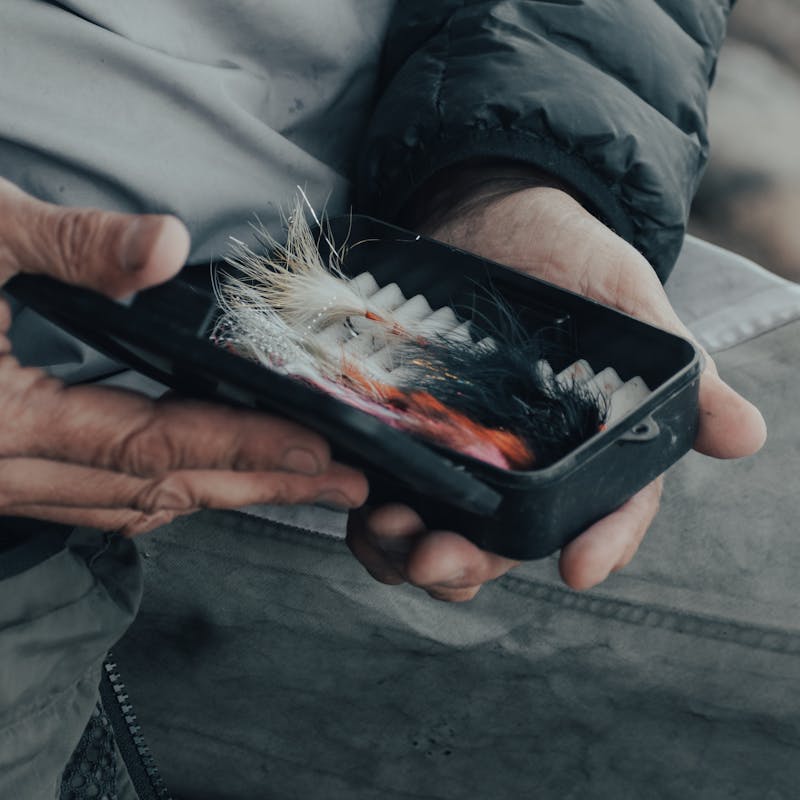
Lightning Bug
A flashy variation of the Pheasant Tail that uses tinsel and flash for added attraction. The Lightning Bug excels in slightly off-color water and as a dropper behind large dry flies. A Montana guide favorite. The Lightning Bug takes the Pheasant Tail Nymph concept, a slim, segmented mayfly imitation, and adds a generous dose of flash. The tinsel body and flashback wingcase catch light in ways that natural materials cannot, creating a beacon that attracts trout from greater distances. This makes the Lightning Bug particularly effective in off-color water, during overcast conditions, and in deeper runs where light penetration is limited. Montana guides keep Lightning Bugs in their boxes for those days when standard patterns are producing but not as well as expected. A switch from a standard Pheasant Tail to a Lightning Bug can turn an average day into a great one. The flash element seems to trigger a competitive or aggressive response in trout, prompting strikes from fish that might otherwise let a natural-colored nymph pass. On the Madison, Gallatin, and Yellowstone rivers, the Lightning Bug is a consistent producer from spring through fall.
Mercer's Dark Stone Nymph
Mercer's Dark Stone Nymph is a highly effective imitation of large stonefly nymphs, specifically designed to represent salmonflies (Pteronarcys californica) and golden stoneflies (Hesperoperla pacifica) in their nymphal stage. Created by renowned fly tier Mike Mercer, this pattern has become a staple in western fly boxes due to its realistic appearance, durability, and proven effectiveness on rivers where stoneflies are abundant. Stonefly nymphs are among the largest aquatic insects in North American rivers, with mature specimens reaching two to three inches in length. They spend two to four years developing in well-oxygenated, rocky streambeds before migrating to shore for emergence. During this extended nymphal stage, they are a primary food source for trout, and large fish actively hunt them along the bottom. Mercer's pattern captures the robust, segmented body, prominent legs, and distinctive antennae that characterize these important insects. The pattern's construction incorporates several features that make it exceptionally lifelike. Rubber legs provide constant motion in the current, suggesting the kicking action of live nymphs. The variegated chenille or dubbing body creates realistic segmentation and the dark coloration matches natural stonefly nymphs. Wingcases made from turkey tail or synthetic materials add anatomical accuracy, while bead heads or lead wire ensure the pattern gets down to the rocky bottom where stoneflies live. Mercer's Dark Stone Nymph is most effective during the weeks leading up to stonefly emergences, typically from late spring through early summer depending on elevation and latitude. However, because stonefly nymphs are available year-round, the pattern produces fish throughout the season. It's particularly deadly when fished dead-drift along the bottom through rocky runs, riffles, and pocket water where stoneflies are abundant. The pattern works on any river system with healthy stonefly populations, including Montana's Madison and Yellowstone rivers, Oregon's Deschutes, Colorado's Roaring Fork, and California's Yuba. It's also effective for steelhead, which eagerly consume stonefly nymphs during their river residency.
Mercury Midge
The Mercury Midge is a modern, minimalist pattern designed to imitate midge larvae and pupae in their subsurface stages. Characterized by its distinctive glass bead or tungsten bead head and sleek, simple body, this pattern has become indispensable for fishing tailwaters, spring creeks, and stillwaters where midges constitute a significant portion of the trout's diet year-round. Midges are among the smallest but most abundant aquatic insects in freshwater ecosystems. Their larvae and pupae stages occur continuously throughout the year, making them available to trout even during the coldest months when other insects are dormant. The Mercury Midge's design reflects the simple anatomy of these tiny insects—a slim, segmented body and a prominent head area where gases accumulate before emergence. What makes this pattern particularly effective is the prominent bead head, which serves multiple purposes. It provides weight to get the tiny fly down to where feeding trout are holding, it creates a realistic thorax bulge that matches the natural insect's proportions, and the reflective quality suggests the gas bubble that forms around emerging midge pupae. This flash and sparkle, while subtle, triggers strikes from selective trout that have learned to key on these specific visual cues. The Mercury Midge excels on technical waters where trout see consistent fishing pressure and have become educated to standard patterns. Spring creeks like Pennsylvania's Letort and Big Spring, tailwaters like Colorado's South Platte and New Mexico's San Juan, and stillwaters like Utah's Strawberry Reservoir all host prolific midge populations where this pattern is extremely effective. It's particularly valuable during winter months when midge hatches may be the only consistent insect activity. Size selection is critical with midge patterns. The Mercury Midge is most commonly tied in sizes 18-24, though some tiers go even smaller for exceptionally technical situations. Color variations—black, olive, gray, red—allow anglers to match the specific midge species present in local waters.
Mop Fly
The Mop Fly is one of the most controversial and simultaneously effective patterns in modern fly fishing. Constructed from chenille strands pulled from household cleaning mops, this unconventional pattern doesn't attempt to imitate any specific aquatic insect with anatomical precision. Instead, it presents a general buggy appearance that trout interpret as food—possibly caddis larvae, grubs, crane fly larvae, or other chunky subsurface invertebrates. What makes the Mop Fly so effective is its unique combination of texture, movement, and profile. The soft, fuzzy chenille fibers undulate enticingly in the current, creating lifelike movement that triggers predatory instincts. The chunky body suggests a substantial food item worth expending energy to consume. The wide range of available colors—from natural tans and olives to bright chartreuse and pink—allows anglers to match different food sources or create attractor patterns for various water conditions. The pattern's effectiveness has made it a staple in competitive fly fishing, where anglers need maximum efficiency. It's also incredibly popular among guides who need reliable patterns that produce fish for clients. However, the Mop Fly has generated significant debate about what constitutes a legitimate fly pattern. Purists argue it's too far removed from traditional imitative fly tying, while pragmatists point to its undeniable effectiveness. Regardless of philosophical debates, the Mop Fly catches fish—lots of them. It's particularly effective in high water conditions when visibility is reduced and trout are looking for substantial food items. It works year-round on freestone streams, tailwaters, and even stillwaters. The pattern is deadly when fished deep through runs, pocket water, and along undercut banks where large trout hold. The Mop Fly's simplicity is also one of its strengths. It's remarkably easy to tie, requiring minimal materials and basic skills. A dozen Mop Flies can be tied in less time than it takes to tie a few complex nymphs. This efficiency makes it practical for anglers who lose flies regularly to snags and fish.
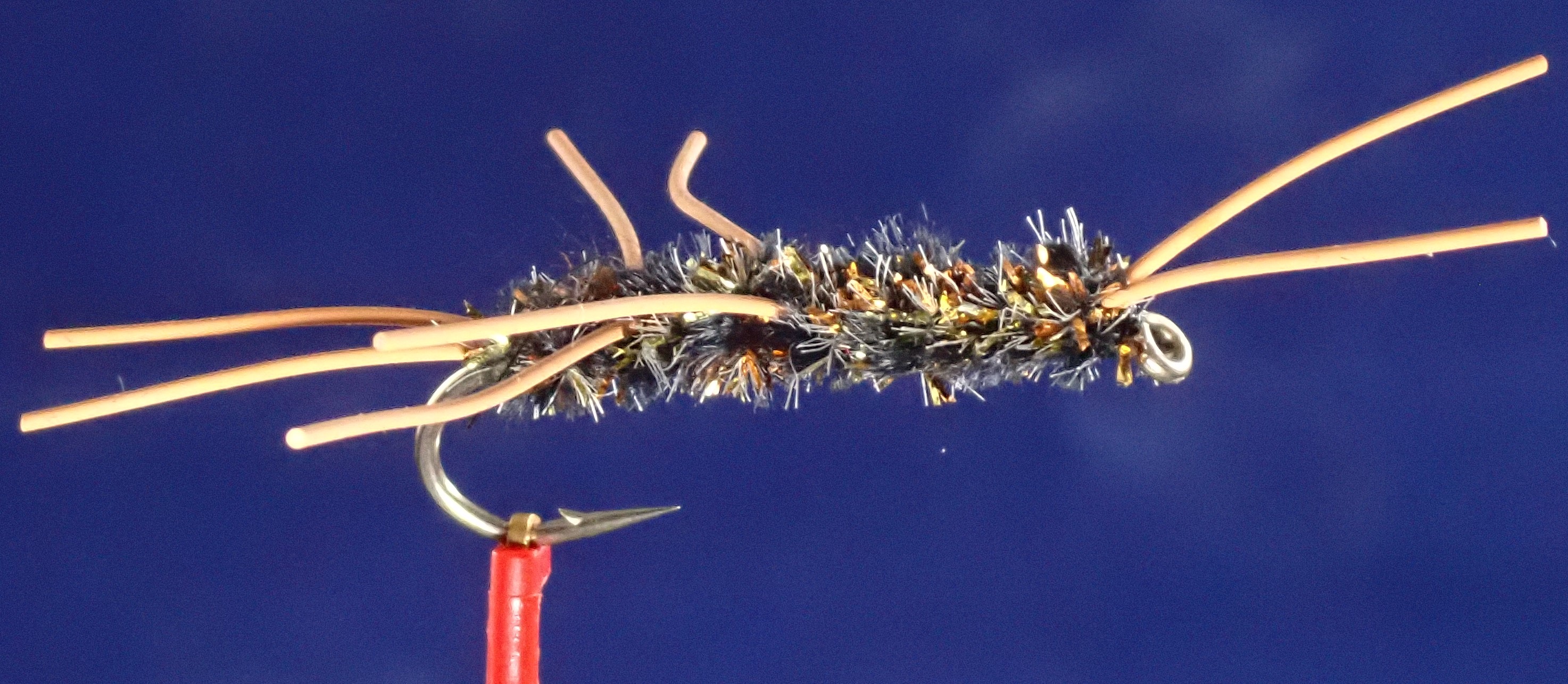
Pat's Rubber Legs
A large, heavily weighted stonefly nymph pattern. Pat's Rubber Legs is the go-to point fly for nymph rigs on the Madison, Yellowstone, and Gallatin rivers. The rubber legs pulse with every micro-current, driving trout wild. Pat's Rubber Legs is the definition of a workhorse nymph. This large, heavily weighted stonefly imitation serves as both an effective fish catcher and the anchor fly in a multi-nymph rig. Its weight gets the entire rig down to the bottom quickly, while its rubber legs provide continuous movement that attracts trout from a distance. The variegated chenille body suggests the mottled coloring of natural stonefly nymphs, and the overall profile matches the large Pteronarcys and Hesperoperla nymphs that inhabit Montana's freestone rivers. On the Madison, Yellowstone, and Gallatin rivers, all premier stonefly streams, Pat's Rubber Legs is arguably the most important fly in a guide's box. It produces fish 12 months of the year, not just during the stonefly emergence. Stonefly nymphs are always present in the drift, dislodged by current, wading anglers, and their own movements. A large Pat's Rubber Legs drifted along the bottom is a convincing imitation that trout eat with confidence. Pair it with a smaller trailing nymph like a Pheasant Tail or Lightning Bug for a devastating two-fly rig.
Perdigon
A Euro-nymphing staple that has taken Montana by storm. The slim, UV-resin-coated body sinks fast and triggers strikes when dead-drifted through fast currents. Available in numerous color combinations. The Perdigon represents a revolution in nymph design that originated in the competitive fly fishing world of Spain. Unlike traditional nymphs with fuzzy dubbing and soft hackle, the Perdigon features a thread and tinsel body sealed under a smooth coat of UV resin, creating a dense, hydrodynamic profile that cuts through the water column like a bullet. This rapid sink rate is the Perdigon's primary advantage; it reaches the strike zone faster than any conventional nymph, allowing anglers to fish effectively in fast, deep water that other patterns cannot reach. Montana anglers have embraced the Perdigon wholeheartedly since the Euro-nymphing revolution swept through the state in the mid-2010s. The pattern is particularly effective on fast-flowing freestone rivers like the Gallatin, the upper Madison, and the Yellowstone, where its ability to sink quickly and maintain contact in heavy currents gives anglers an edge. Even on tailwaters, the Perdigon's slim profile and subtle flash produce fish when traditional nymphs are refused.
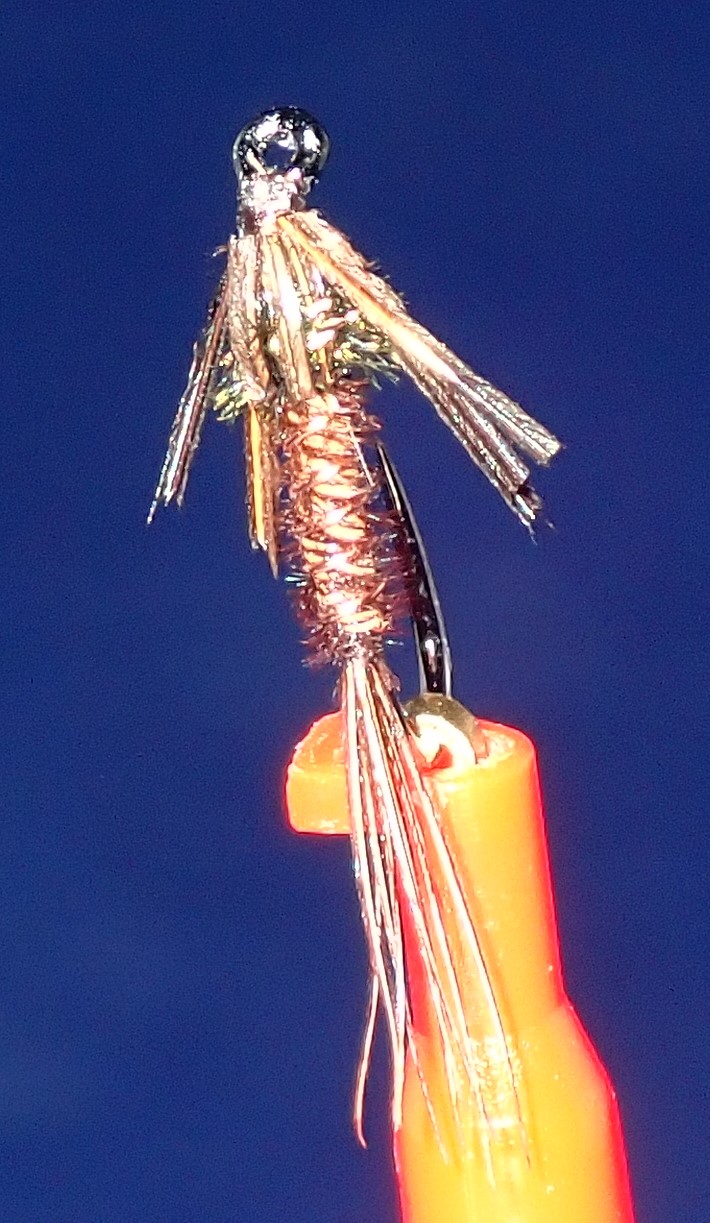
Pheasant Tail Nymph
Frank Sawyer's classic nymph pattern imitates a wide range of mayfly nymphs. The pheasant tail fibers create a realistic segmented body. Effective year-round in sizes #14-20, this pattern belongs in every Montana fly box. The Pheasant Tail Nymph is the most important subsurface fly in the history of fly fishing. Frank Sawyer's original design used nothing but pheasant tail fibers and copper wire, with no thread, no dubbing, no synthetics. The result was a slim, naturally segmented nymph that sinks quickly and perfectly imitates the profile of a swimming or drifting mayfly nymph. Modern variations have added a bead head for extra weight and flash, making an already deadly pattern even more effective. In Montana, the bead head Pheasant Tail is a year-round producer on every river in the state. It matches Baetis nymphs in fall and spring, PMD nymphs in summer, and various mayfly species throughout the seasons. Whether fished as a trailing nymph behind a dry fly, in a two-nymph Euro-style rig, or under an indicator, the Pheasant Tail consistently catches fish. Its slim profile sinks quickly and looks natural even to the most selective trout on the Missouri and Bighorn tailwaters.
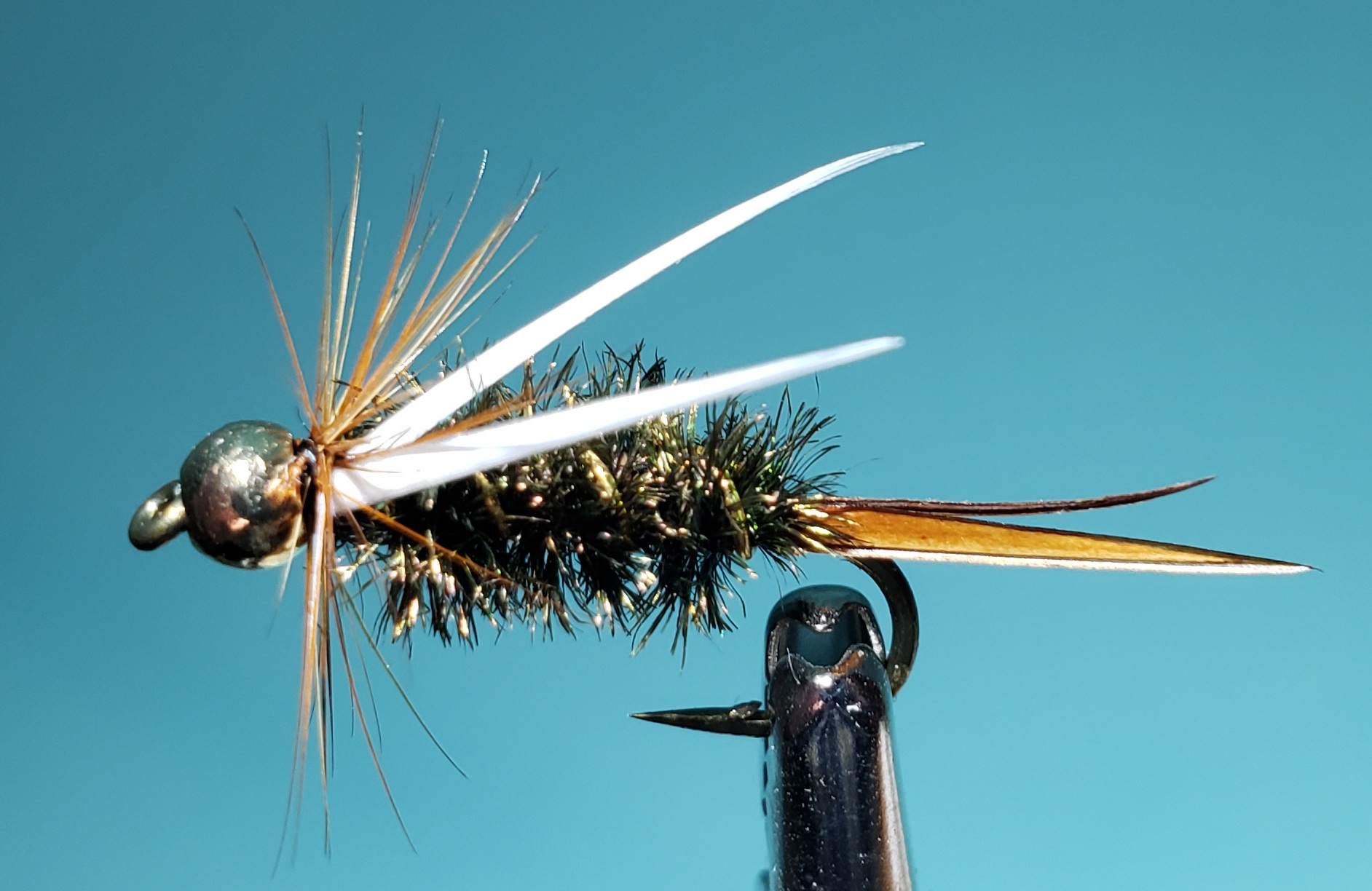
Prince Nymph
A classic attractor nymph with peacock herl body and white biots. The Prince Nymph doesn't imitate any specific insect but suggests many. It's a reliable searching pattern when drifted through riffles and runs on all Montana rivers. The Prince Nymph occupies a unique space in fly fishing; it is perhaps the most effective attractor nymph ever designed. The combination of a peacock herl body, white goose biot wing, and brown hackle creates a fly that doesn't precisely match any natural insect but somehow suggests dozens of them. Trout see the Prince Nymph and recognize it as food, plain and simple. The iridescent sheen of the peacock herl, the contrasting white wings, and the buggy profile all contribute to its universal appeal. In Montana, the Prince Nymph is a workhorse pattern that produces fish from the first runoff of spring through the cold days of late fall. It excels as a dropper behind large dry flies, as a searching nymph under an indicator, and as a point fly in a two-nymph rig. On the Madison, Gallatin, and Yellowstone rivers, the Prince Nymph consistently produces when conditions are changing, hatches are unclear, or fish seem unwilling to commit to specific imitations. It is the problem-solving nymph that every angler should carry.
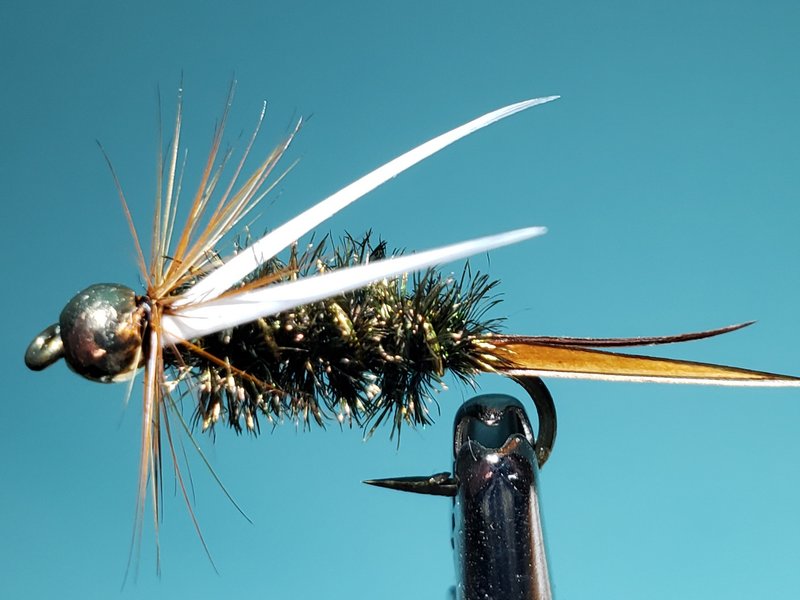
Prince Nymph
The Prince Nymph is one of the most versatile and productive attractor nymphs in fly fishing history. Originally tied by Doug Prince in the 1930s and later refined by Buz Buszek, this pattern has become a staple in fly boxes across North America. Its distinctive appearance, featuring peacock herl, white biots, and soft hackle, makes it an irresistible offering to trout in nearly every water type. What makes the Prince Nymph so effective is its dual nature as both an attractor and an imitator. The peacock herl body creates an iridescent sheen that catches fish attention, while the white goose biot wings provide a striking contrast that fish can see in turbid or stained water. The brown hackle gives the fly lifelike movement in current, breathing and pulsing with every drift. While it doesn't precisely imitate any single insect, it suggests stonefly nymphs, caddis pupae, and various other aquatic insects that trout feed on regularly. The Prince Nymph excels in freestone rivers and streams where stoneflies and caddis are prevalent. Its dark profile makes it particularly effective in pocket water, runs, and riffles where trout hold in current breaks waiting for drifting nymphs. The fly works well as both a searching pattern when you're not sure what fish are eating, and as a proven producer during general mayfly and caddis activity. Many anglers use it as the lead fly in a two-nymph rig, paired with a smaller midge or mayfly pattern. One of the Prince Nymph's greatest strengths is its effectiveness across seasons. In spring, it imitates the early stonefly nymphs beginning to move toward shore. Throughout summer, it serves as a general caddis pupa imitation. In fall, when larger insects are still active but cooler water makes fish more selective to subsurface presentations, the Prince continues to produce. Its versatility extends to various water types, from small mountain creeks to large tailwaters, making it an essential pattern for any fly fisher's arsenal.
Ray Charles
A scud/sowbug pattern that is absolutely essential on the Bighorn River. Named because you'd have to be blind not to catch fish on it, the Ray Charles imitates the freshwater crustaceans that dominate the diet of Bighorn River trout. The Ray Charles is a deceptively simple pattern that imitates the sowbugs (Asellus) and scuds (Gammarus and Hyalella) that thrive in the weed-rich tailwaters of Montana. These small freshwater crustaceans are a year-round food source and represent a disproportionate percentage of the trout diet on rivers like the Bighorn, where aquatic vegetation provides ideal habitat for crustacean populations. The Ray Charles' slim profile and subtle coloring match these naturals with just enough detail to fool even educated tailwater trout. On the Bighorn River, the Ray Charles is not just a good fly; it is arguably the single most important pattern in a Bighorn angler's box. The river's prolific weed beds support enormous populations of sowbugs and scuds, and trout feed on them constantly. A size #16 Ray Charles in pink or gray, dead-drifted near the bottom, catches fish with a consistency that borders on unfair. The pattern also produces on the Missouri River and other tailwaters where crustaceans are an important food source.
Red Blood Midge
The Red Blood Midge is a specialized pattern designed to imitate the larval stage of Chironomidae, commonly known as blood midges due to their distinctive red coloration caused by hemoglobin in their bodies. These tiny aquatic insects are among the most important food sources for trout in tailwaters, spring creeks, and stillwaters, particularly during winter months and early spring when other insect activity is minimal. The pattern's simple construction belies its effectiveness in challenging conditions. Blood midges thrive in cold, oxygen-rich waters, making them a year-round presence in many trout fisheries. The larvae live in bottom sediments and organic matter, where they build small tubes from silk and debris. When ready to emerge, they leave these tubes and swim toward the surface, making them vulnerable to feeding trout. The Red Blood Midge imitates both the bottom-dwelling larva and the ascending pre-emergent stage, which is when trout most actively target these insects. This pattern excels in tailwater fisheries below dams, where consistent flows and temperature create ideal conditions for midge populations to flourish. Rivers like the South Platte in Colorado, the San Juan in New Mexico, and the Bighorn in Montana are famous for their midge hatches, and the Red Blood Midge is an essential pattern for success on these waters. The fly is equally effective in lakes and reservoirs, where midges often represent the primary food source for cruising trout, especially in deeper water columns. Fishing the Red Blood Midge requires patience and precision. The tiny hook sizes (#18-24) demand fine tippets, typically 6X to 7X, which can test an angler's knot-tying skills and fighting technique. The presentation must be dead-drift, as any drag will spook selective trout feeding on naturals. In stillwaters, a slow retrieve near the bottom or suspended beneath an indicator can be deadly. The rewards for mastering this pattern are substantial—many of the largest trout in technical fisheries key on midges, making the Red Blood Midge a secret weapon for anglers willing to fish small and fish slow.
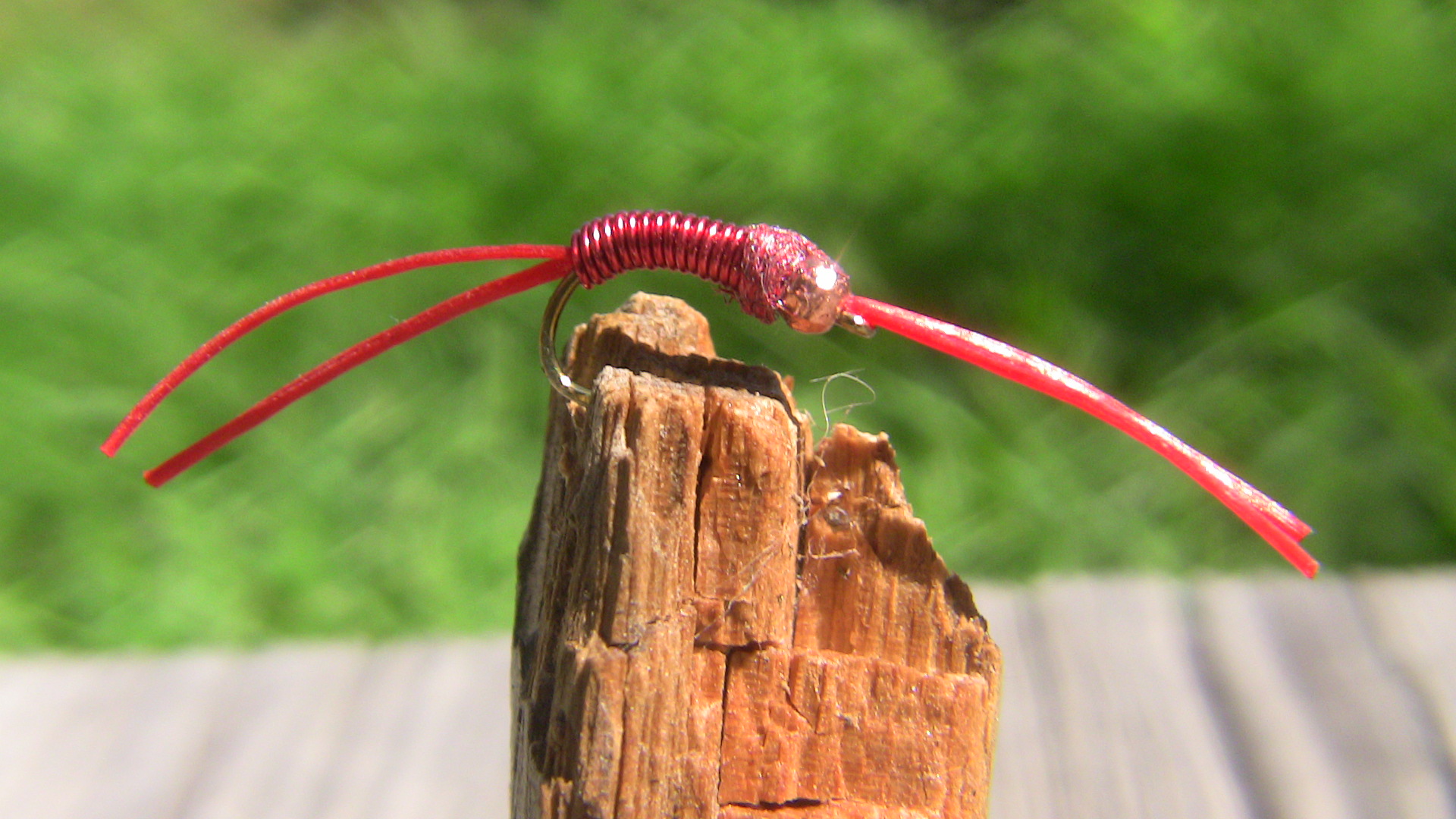
San Juan Worm
Love it or hate it, the San Juan Worm catches fish. This simple chenille or micro-tubing pattern imitates aquatic worms that are a significant food source in tailwater rivers. Particularly effective on the Bighorn and Missouri after rain events. The San Juan Worm divides the fly fishing community like no other pattern. Purists dismiss it as barely qualifying as a fly, while pragmatists point to its undeniable effectiveness and the scientific reality that aquatic worms (Oligochaeta) constitute a meaningful portion of trout diets, particularly in tailwater environments. On the Bighorn River, stomach sampling studies have shown that aquatic worms can represent up to 20 percent of a trout's diet during certain times of year. Regardless of where you fall in the debate, the San Juan Worm deserves a place in your fly box if you fish Montana's tailwaters. After rain events, rising water dislodges worms from the substrate and puts them into the drift, creating a feeding opportunity that trout exploit enthusiastically. Even during stable conditions, a San Juan Worm fished deep and slow on the Bighorn or Missouri can produce fish when more traditional patterns are not producing. The pattern is especially effective for large trout that have learned to target high-calorie food items with minimal effort.
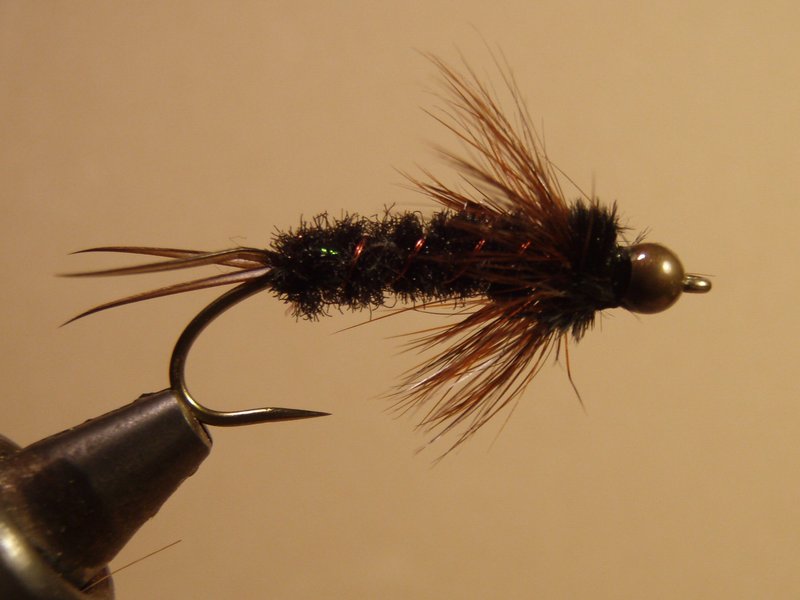
Stonefly Nymph
The Stonefly Nymph is a broad category of patterns designed to imitate the nymphal stage of Plecoptera, one of the most important aquatic insect orders for trout. These robust, protein-rich insects live for one to three years in clean, well-oxygenated freestone rivers, making them a year-round food source that trout actively seek. Generic stonefly nymph patterns use dark colors, bulky profiles, and rubber legs to suggest various species from small golden stones to giant salmonflies, providing versatile searching patterns effective in diverse water types. Stonefly nymphs are poor swimmers that crawl along the bottom among rocks and gravel, making them vulnerable to trout as they move between feeding areas or migrate toward shore to emerge. Their substantial size and meaty bodies make them high-value targets—a single large stonefly nymph provides more nutrition than dozens of small mayflies. Trout in freestone rivers key on stoneflies throughout the year, though feeding activity intensifies in spring and early summer when nymphs migrate toward shore in preparation for emergence. These patterns excel in fast, broken water where natural stoneflies thrive. Focus on boulder-strewn runs, pocket water behind rocks, deep riffles, and along rocky banks where nymphs crawl during migration. The flies work best when fished near the bottom using weighted patterns or added split shot. Dead-drifting through prime lies is the primary technique, though occasionally tumbling the fly along the substrate or adding slight movement can trigger strikes from aggressive fish. The Stonefly Nymph's effectiveness spans seasons because different species emerge at different times. Small golden stones emerge in late spring, larger species like salmonflies and golden stones hatch in early summer, and some species continue emerging into fall. Even when no hatch is occurring, trout feed opportunistically on stonefly nymphs year-round, making these patterns reliable searching flies. Their bulk and dark coloration create a strong silhouette that fish can see in turbid or stained water, adding to their versatility across varying conditions.
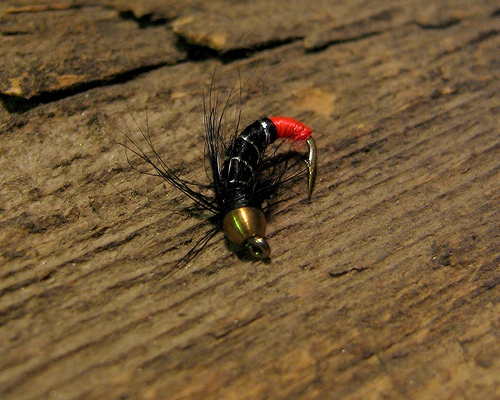
Zebra Midge
A devastatingly simple midge pupa pattern. Thread body with a bead head, and that's it. The Zebra Midge is the most effective winter pattern on Montana tailwaters and produces year-round on the Missouri and Bighorn rivers. The genius of the Zebra Midge lies in its simplicity. A small bead head, a thread body wrapped in even turns to create segmentation, and perhaps a few fibers for a collar, and that is all there is to it. Yet this pattern imitates the midge pupae that comprise an enormous percentage of a trout's diet on tailwater rivers. Midges hatch every day of the year on rivers like the Missouri and Bighorn, and the Zebra Midge matches them with astonishing effectiveness. The pattern's versatility is remarkable. Fished under an indicator in the classic dead-drift presentation, it produces fish consistently. But the Zebra Midge is also deadly when fished in the surface film as a midge cluster or suspended just below the surface on a greased leader. On winter days when other patterns fail, a small Zebra Midge in #18-22 fished deep and slow can save what might otherwise be a fishless outing. It is the great equalizer, the fly that always works when nothing else does.
Zug Bug
The Zug Bug is a classic American nymph pattern that has been catching trout consistently since its creation in the 1930s. This versatile attractor nymph features a distinctive combination of peacock herl, silver tinsel, and soft hackle that creates an irresistible profile suggesting caddis pupae, mayfly nymphs, and various other aquatic insects. The pattern's creator, Cliff Zug, developed this fly for Pennsylvania's limestone streams, but its effectiveness has made it a standard pattern in fly boxes across North America. What makes the Zug Bug so productive is its dual nature as both an attractor and a suggestive imitation. The peacock herl body provides the iridescent sheen that attracts trout attention, while the silver tinsel rib adds flash that suggests the gas bubble trailing emerging caddis pupae. The soft brown hackle creates movement and suggests the legs and emerging wings of various insects. The wood duck flank feather used for the tail adds subtle barring and natural coloration that fish find convincing. While the Zug Bug doesn't precisely imitate any single insect, it suggests so many different food items that trout consistently mistake it for something edible. The pattern excels in a wide variety of water types and conditions. It works particularly well in limestone and freestone streams where caddis are prevalent, as the tinsel rib and overall profile closely suggest caddis pupae ascending to the surface. The fly is equally effective as a searching pattern when you're unsure what insects are active—its attractor qualities make it a reliable choice for prospecting likely holding water. The Zug Bug performs well in both clear and slightly stained water, with the peacock and tinsel providing enough flash to attract attention without appearing unnatural. Seasonal effectiveness spans spring through fall, making it a three-season pattern for most trout waters. In spring, it imitates early caddis emergences and general mayfly activity. Summer brings diverse insect life, and the Zug Bug's suggestive design allows it to pass for many different species. Fall sees continued caddis activity and opportunistic feeding, both situations where the Zug Bug produces reliably. The pattern works in various presentations—dead-drifted along the bottom, swung through runs, or fished beneath an indicator in deeper pools.
Streamers(11)
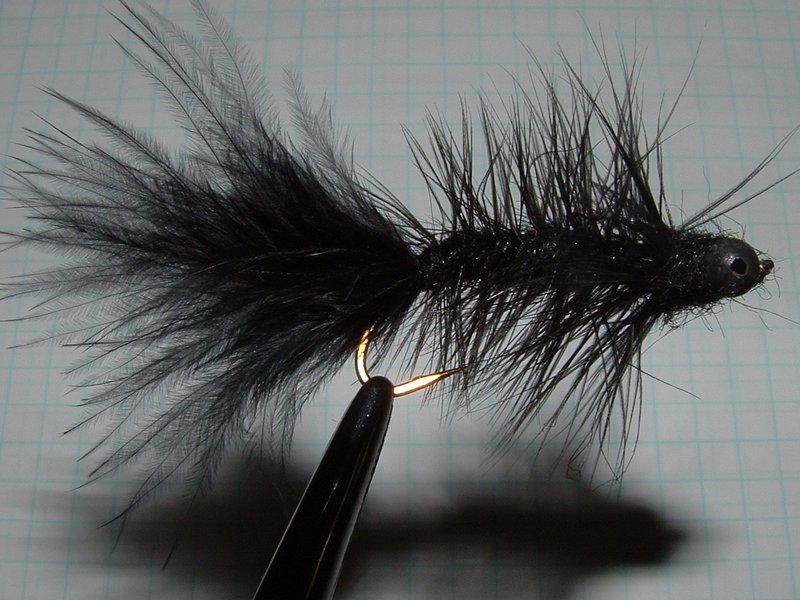
Black Woolly Bugger
The Black Woolly Bugger stands as arguably the most versatile and universally effective fly pattern ever created. This simple yet deadly streamer imitates leeches, baitfish, sculpins, crayfish, and large aquatic insects—essentially anything meaty that trout, bass, and other gamefish feed on. If forced to fish with only one fly for the rest of their lives, countless anglers would choose the Black Woolly Bugger without hesitation. The pattern's effectiveness comes from its lifelike movement in the water. The soft marabou tail undulates with even the slightest current, creating the illusion of a living creature swimming or struggling. The palmered hackle along the body adds additional movement while creating a buggy, substantial silhouette. When stripped through the water, the Woolly Bugger pulses and breathes like prey, triggering aggressive strikes from predatory fish. Black is the classic color and often the most productive, especially in off-color water, low light conditions, or when imitating leeches. The pattern excels in fall and winter when trout become more aggressive and feed heavily on larger prey items to build reserves. It works in every water type imaginable—from tiny mountain brooks where size 8 versions take wild trout, to large tailwaters and reservoirs where size 4 monsters draw crushing strikes from trophy fish. Fishing techniques vary widely: dead-drift it like a nymph through deep runs, strip it erratically like a fleeing baitfish, swing it on a tight line through pools, or even skate it across the surface. The Woolly Bugger produces at all depths and speeds, making it the ultimate searching pattern when you're uncertain what fish are feeding on or where they're holding.
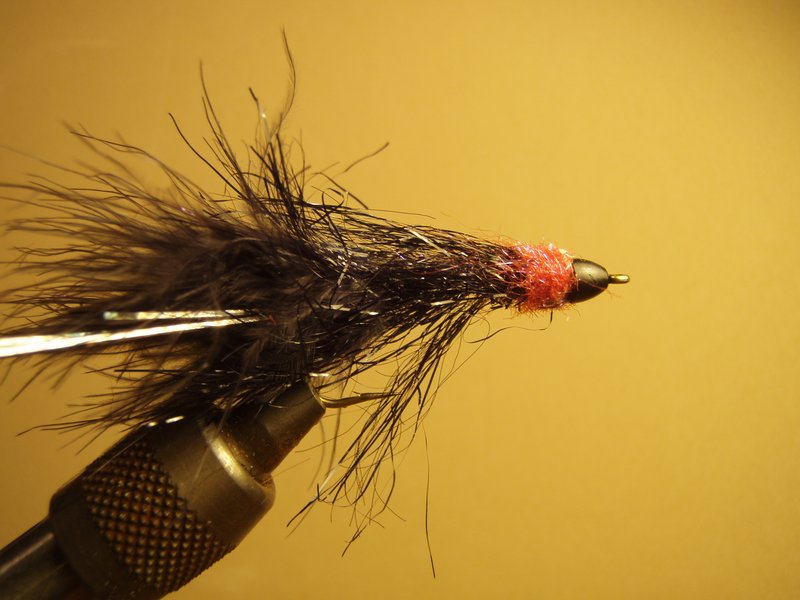
Egg Sucking Leech
The Egg Sucking Leech is an audacious pattern that combines two of the most effective subsurface offerings in one fly: a leech imitation and an egg. This Alaskan-born pattern was designed to target aggressive rainbow trout and char feeding in spawning areas, but has proven deadly across the continent for any trout species. The garish combination of a dark leech body with a bright orange or pink bead head creates an irresistible target that triggers both predatory and egg-feeding instincts. Despite its somewhat comical name, the Egg Sucking leech represents a real feeding behavior. During salmon and trout spawning periods, leeches are attracted to spawning redds where they feed on dislodged eggs. Trout quickly learn that a dark, undulating shape near spawning areas often means an easy meal of both the leech and any egg it might be consuming. The pattern capitalizes on this association, presenting both food sources in one package. The fly works exceptionally well during fall, winter, and spring when various salmonid species are spawning. In rivers with fall salmon runs or spring rainbow spawns, the Egg Sucking Leech can be absolutely devastating. It's equally effective in tailwaters below dams year-round, where spawning activities occur throughout the seasons. The pattern also produces well in non-spawning periods simply as an attractor pattern, with the bright bead drawing attention in murky or deep water. This pattern has proven effective from Alaska's salmon streams to Montana's freestone rivers, Wyoming's tailwaters, Idaho's spring creeks, and throughout the Pacific Northwest. It works in Colorado's Gold Medal waters, California's Sierra streams, and even eastern waters like Pennsylvania's steelhead streams. The Egg Sucking Leech is particularly valuable in early season or high water conditions when visibility is reduced and trout respond to bold, visible flies. Fish it on a dead drift through deep runs, swing it through pools, or strip it erratically to imitate a fleeing leech.
Grey Ghost
The Grey Ghost is a legendary Maine streamer pattern created specifically to imitate smelt, the primary baitfish in many New England trout and landlocked salmon waters. This elegant feather-wing streamer features a silver body, distinctive orange belly, and graceful layered wings that create a remarkably lifelike swimming action. The pattern represents the pinnacle of traditional New England streamer design, where artistry and effectiveness combine to create flies that are as beautiful as they are deadly. Smelt are anadromous baitfish that spend most of their lives in lakes or the ocean, running up tributary streams to spawn in early spring. In Maine's landlocked salmon waters and throughout New England's cold lakes, smelt constitute the primary forage for large predatory fish. The Grey Ghost's design captures the smelt's silvery flanks, orange-tinged belly, and slender profile, making it irresistible to hungry trout and salmon searching for a substantial meal. The pattern excels when fished in Maine's famous landlocked salmon lakes like Sebago, Moosehead, and the Rangeley Lakes chain. It's equally effective in other New England waters including New Hampshire's Lake Winnipesaukee, Vermont's Lake Champlain, and throughout the Adirondacks. While designed for Eastern waters, the Grey Ghost has proven effective wherever trout feed on silvery baitfish, including Western tailwaters and reservoirs. The fly works best when retrieved with a slow, undulating motion that mimics an injured or fleeing smelt. Traditionally tied in sizes 2-6 for landlocked salmon and large brook trout, the Grey Ghost can be scaled down to size 8-10 for stream fishing or scaled up to size 1/0 for saltwater use. The pattern is most productive from ice-out through early summer when smelt are running and again in fall when baitfish concentrate. Fish it on a floating line with a slow retrieve in shallow water, or use a sink-tip line to probe deeper haunts where large fish cruise.
Little Brook Trout
The Little Brook Trout is a realistic streamer pattern designed to imitate juvenile brook trout, which are a primary forage fish for large, predatory trout in many waters. During fall, when brook trout spawn in headwater streams and tributaries, young-of-the-year brookies become abundant and vulnerable. Large brown trout, rainbow trout, and even adult brook trout will aggressively target these small fish, making the Little Brook Trout pattern incredibly effective during autumn months. This pattern stands out for its attention to anatomical detail. Quality Little Brook Trout patterns incorporate the distinctive characteristics of juvenile brookies—the olive-green back, cream-colored belly, vermiculated pattern on the back and dorsal fin, red spots with blue halos along the sides, and the white-edged fins. This level of realism triggers predatory instincts in large trout that have learned to associate this specific color pattern with an easy meal. The Little Brook Trout excels in waters where brook trout populations naturally occur and where larger predatory trout hunt them. This includes freestone streams in the Appalachians, Rocky Mountains, and northeastern United States, as well as large western rivers with tributary spawning populations. The pattern is particularly effective in the weeks leading up to and during the fall spawn when juvenile brookies are most active and visible. Fishing technique is crucial for maximizing the pattern's effectiveness. Cast the Little Brook Trout near structure—undercut banks, logjams, boulder fields—where large trout ambush prey. Use an erratic retrieve with pauses and quick strips to imitate a disoriented or injured baitfish. The strikes are often violent, as large trout attack aggressively when they encounter what appears to be vulnerable forage. While primarily a fall pattern, the Little Brook Trout can be effective throughout the season in waters with brook trout populations. However, its greatest strength is during the spawn when young brookies are most concentrated and active. Anglers targeting trophy trout often keep this pattern in their streamer selection specifically for autumn fishing.
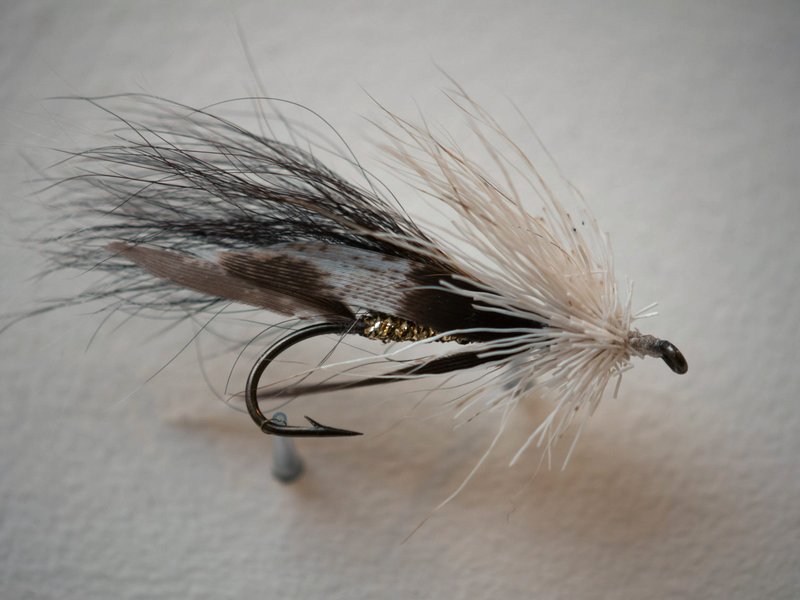
Muddler Minnow
The Muddler Minnow is one of the most iconic and versatile patterns in fly fishing history. Created by Don Gapen in the 1930s, this streamer has proven effective for over 80 years and remains a staple in fly boxes worldwide. Originally designed to imitate sculpins—bottom-dwelling baitfish common in coldwater streams—the Muddler has proven equally effective as a general baitfish imitation, a terrestrial hopper pattern, and even a subsurface caddis adult imitation. The pattern's defining characteristic is its spun deer hair head, which creates a distinctive silhouette and generates significant water disturbance. This bulky head pushes water when stripped, creating vibrations that predatory fish detect through their lateral lines. The turkey wing quill creates a mottled appearance that closely resembles a sculpin's coloration, while the gold tinsel body adds flash that suggests scales and draws attention. What makes the Muddler Minnow truly remarkable is its adaptability. Fished on a floating line with a slow retrieve, it skates on the surface like a hopper or struggling baitfish. With a sink-tip line and faster retrieve, it dives and darts like a fleeing sculpin or minnow. Fished dead-drift along the bottom, it can imitate a sculpin or large caddis. This versatility means a single pattern serves multiple purposes, simplifying fly selection and increasing confidence. The Muddler excels on freestone streams, rivers with sculpin populations, and anywhere large trout or smallmouth bass hunt baitfish. It's particularly effective in Montana, Wyoming, Idaho, and other western states where sculpins are abundant. However, the pattern has proven successful worldwide, from Alaskan rainbows to New Zealand browns to European grayling. Size selection varies based on target species and forage. Smaller versions (sizes 8-10) work well for trout on medium-sized streams, while larger versions (sizes 2-4) are deadly for big browns, pike, and bass. The pattern is especially effective during fall when large trout become increasingly aggressive and target substantial food items before winter.
Ostrich Intruder
The Ostrich Intruder is a modern, aggressive streamer pattern designed to trigger violent strikes from large, predatory fish. Part of the intruder family of flies developed for steelhead fishing, this pattern has proven equally effective for trophy trout, particularly during fall and winter when large fish become increasingly aggressive and territorial. The pattern's name comes from its use of ostrich herl, which provides exceptional movement and a lifelike pulsing action in the water. Intruder-style flies are characterized by their long, flowing materials, articulated construction, and aggressive profile. They're designed to intrude on a fish's territory and provoke a reaction strike rather than simply imitate a food source. The Ostrich Intruder exemplifies this philosophy with its oversized profile, contrasting colors, and materials that create maximum movement with minimal effort from the angler. The ostrich herl used in this pattern is key to its effectiveness. These long, webby fibers undulate with the slightest current or movement, creating a pulsing, breathing appearance that suggests life. The fibers are translucent, allowing light to pass through and creating subtle color shifts. When combined with flash materials like Flashabou or Ice Dub, the pattern creates an irresistible combination of movement, color, and sparkle. The Ostrich Intruder is particularly effective during fall spawning periods when large brown trout, rainbow trout, and bull trout become aggressive and territorial. These fish will attack intruder patterns out of territorial aggression even when not actively feeding. The pattern is also deadly for winter steelhead, which respond aggressively to large, dark patterns swung through runs and pools. Fishing the Ostrich Intruder requires different techniques than traditional streamers. It's most effective when swung on a sink-tip or full-sinking line, allowing the current to impart action to the materials. The angler casts across and downstream, allows the fly to swing through the run, then takes a step or two downstream and repeats. This methodical covering of water is especially effective for steelhead and migratory trout.
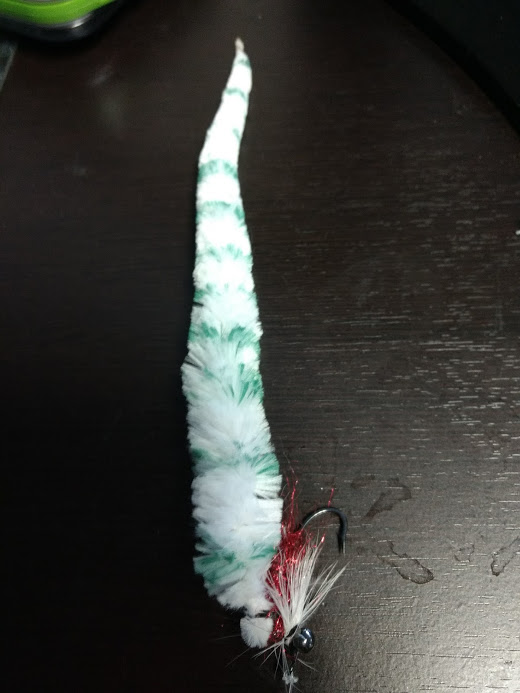
Sculpzilla
A simple sculpin imitation that swims with an enticing undulating action. The Sculpzilla is less flashy than articulated streamers but deadly effective. Fish it on a short-line swing or strip it along the banks for aggressive brown trout. The Sculpzilla is a masterclass in effective simplicity. While the streamer world has trended toward ever-larger, ever-more-complex articulated patterns, the Sculpzilla proves that a well-designed single-hook fly can be just as effective. The pattern uses a minimal number of materials (primarily a wool head and marabou or rabbit strip body) to create a sculpin profile that rides hook-point-up and swims with a natural, undulating motion that perfectly mimics a sculpin darting along the bottom. Sculpins are a critical forage species in Montana's trout rivers. These bottom-dwelling baitfish are found in every stream and river in the state, and they are a preferred food item for large brown trout. The Sculpzilla's hook-up design allows it to be bounced along rocky bottoms without snagging, putting it right in the zone where sculpins live. On the Madison, Yellowstone, and Missouri rivers, the Sculpzilla consistently produces large trout that have learned to associate the sculpin silhouette with an easy, protein-rich meal.
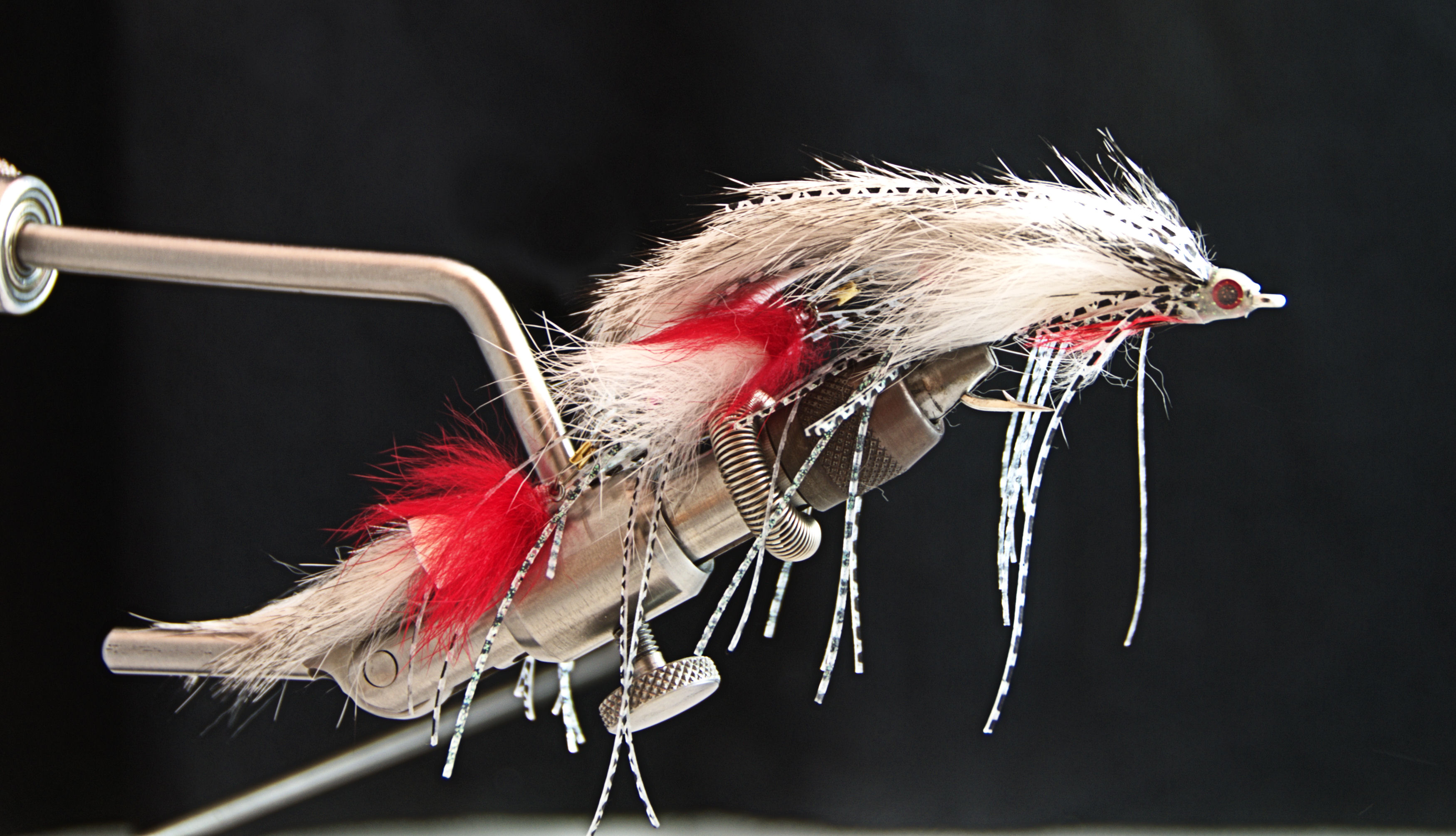
Sex Dungeon
Kelly Galloup's articulated streamer is designed to provoke territorial aggression from large brown trout. This big, flashy fly pushes water and triggers reaction strikes. Fish it on sinking tips along cut banks and boulder structure. The Sex Dungeon is not designed to be eaten; it is designed to be attacked. Kelly Galloup, the master of the modern streamer game, created this pattern specifically to trigger the territorial aggression of large brown trout. With its articulated body, marabou tail, flash-infused profile, and pulsating materials, the Sex Dungeon pushes water and creates a commotion that demands a response from any predatory fish in the vicinity. The fly does not need to closely match any specific baitfish; it needs to intrude on a trout's territory and provoke a violent reaction. Fishing the Sex Dungeon is a fundamentally different experience from nymph or dry fly fishing. You are hunting, not waiting. You are casting to specific pieces of structure (undercut banks, logjams, boulder gardens, deep slots) where large trout establish territories. The strike, when it comes, is explosive: a flash of brown and gold, a savage pull, and the fight of a lifetime. On Montana's premier brown trout rivers (the Madison, the Yellowstone below Livingston, and the lower Missouri) the Sex Dungeon is the pattern that unlocks access to the biggest fish in the river.
Thin Mint
The Thin Mint is a modern articulated streamer designed to imitate baitfish and sculpins with a slim profile and natural swimming action. Created in recent years as part of the articulated streamer revolution, this pattern features a dual-hook design connected by articulated shanks or wire, allowing the rear section to swing freely and create lifelike movement. The characteristic olive and black color scheme with flash materials suggests various forage fish while maintaining a low profile that doesn't overwhelm trout in smaller waters. Articulated streamers like the Thin Mint represent a significant evolution in streamer fishing, moving beyond traditional single-hook patterns to create flies with enhanced action and realism. The articulation point allows the tail section to undulate with each strip and pause, imitating the swimming motion of fleeing baitfish or bottom-dwelling sculpins. This movement triggers predatory strikes from aggressive trout, including the trophy-class fish that often ignore standard streamers. The slim profile maintains castability while providing enough bulk to push water and attract fish attention. The pattern excels in medium to large rivers where trout feed on substantial forage. Spring runoff and fall conditions, when trout actively hunt baitfish to build energy reserves, are prime times for streamer fishing. The Thin Mint works particularly well in off-color water, where its dark profile and flash materials create contrast that predatory fish can detect from a distance. The fly is equally effective in clear water when fished with aggressive presentations that trigger reaction strikes rather than careful inspection. Fishing the Thin Mint requires commitment to the streamer game—active casting, varied retrieves, and covering water methodically. This isn't passive fishing; it's hunting for aggressive trout willing to chase down moving prey. The rewards can be substantial, as streamer fishing consistently produces the largest trout in any given system. The articulated design hooks fish reliably, with the rear hook catching trout that strike short while the front hook secures fish that commit fully to the fly.
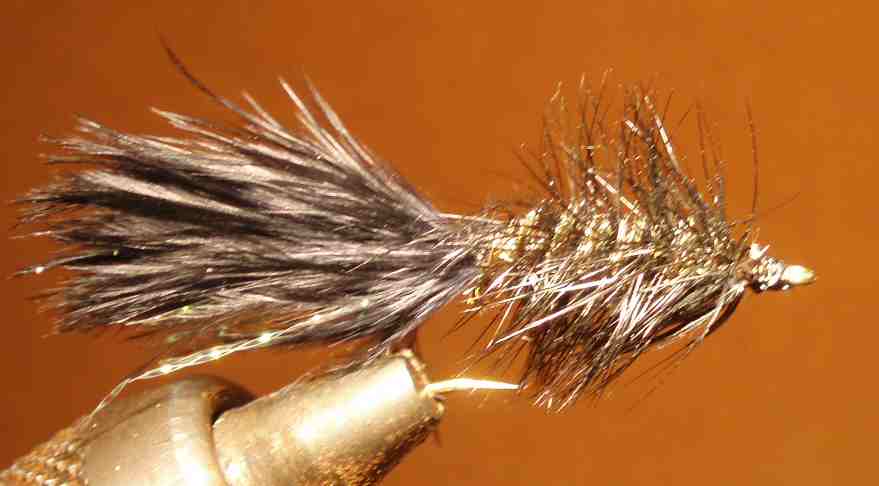
Woolly Bugger
If you could only fish one fly for the rest of your life, many guides would choose the Woolly Bugger. It imitates leeches, baitfish, crayfish, and large nymphs. Strip it, swing it, dead-drift it; the Woolly Bugger catches fish everywhere. The Woolly Bugger is the Swiss Army knife of fly fishing. Its marabou tail undulates seductively with the slightest current or rod-tip movement, its palmered hackle body creates a buggy, lifelike profile, and its overall shape suggests a wide range of aquatic prey items. Whether a trout sees it as a leech, a sculpin, a crayfish, a large stonefly nymph, or a small baitfish, the result is the same: they eat it. The Woolly Bugger is effective in still water and moving water, in clear conditions and dirty water, in winter and summer. In Montana, the Woolly Bugger is the pattern you tie on when nothing else is working, or when everything is working and you want to catch bigger fish. A black Woolly Bugger stripped along the banks of the Madison or Yellowstone will draw strikes from brown trout that ignore all other offerings. Olive and brown versions excel on tailwaters. White Woolly Buggers fished deep on sinking lines can produce the largest fish of the day. No Montana fly box is complete without a selection of Woolly Buggers in black, olive, brown, and white, in sizes #4 through #10.
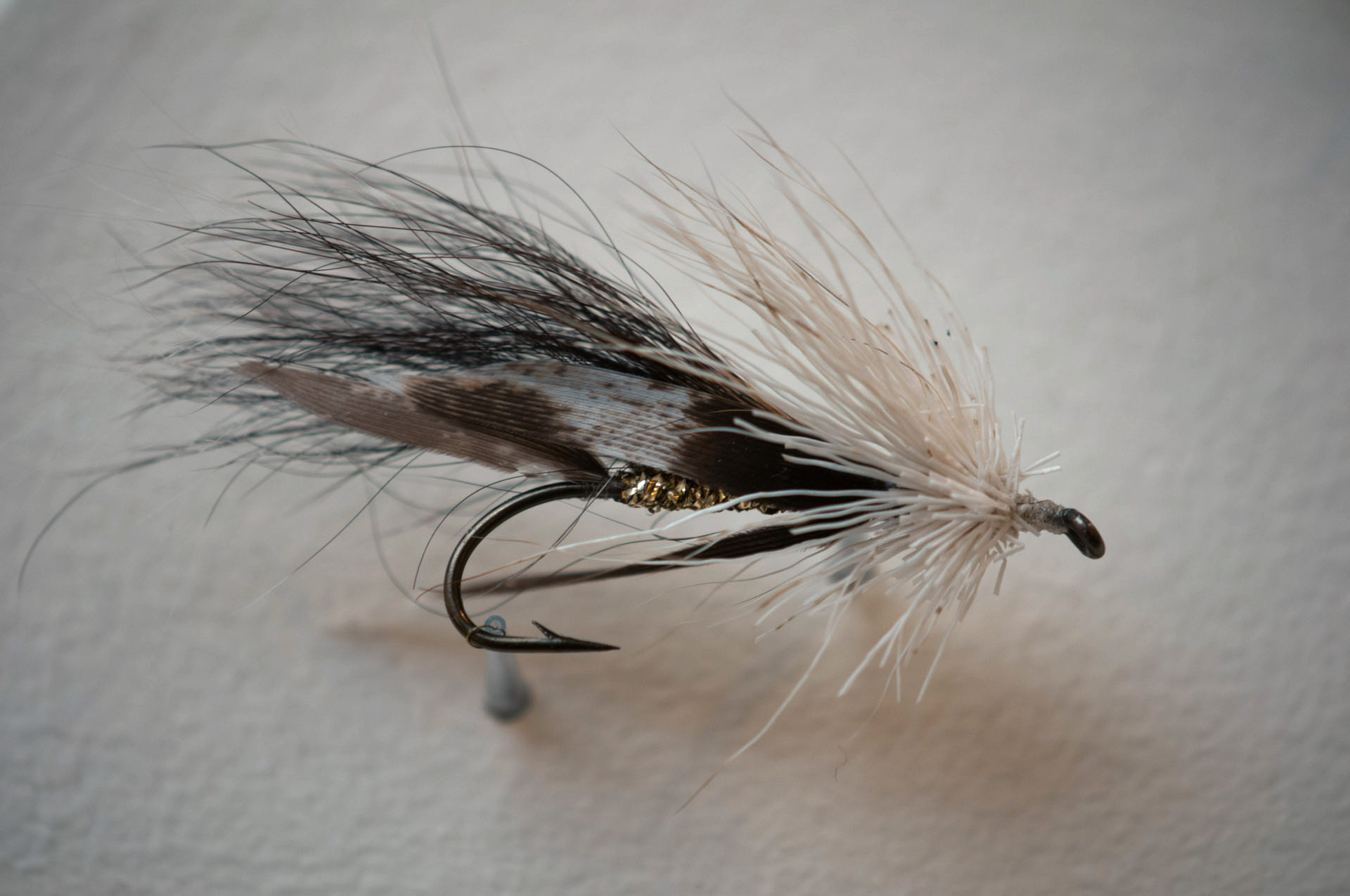
Zuddler
A versatile sculpin-meets-Muddler pattern that works fished slow or fast, deep or shallow. The spun deer hair head creates surface disturbance when stripped and can be dead-drifted like a large nymph. The Zuddler occupies a unique niche in the streamer world as a fly that can be fished effectively at virtually any speed and depth. Its spun and clipped deer hair head, borrowed from the classic Muddler Minnow, gives it buoyancy and creates a water-pushing action when stripped. Below the head, a zonker strip body and marabou tail provide the movement and lifelike action of modern streamer designs. This combination of old-school and new-school elements makes the Zuddler one of the most versatile streamers available. The Zuddler's versatility is its greatest asset on Montana rivers. Fish it with an aggressive strip on a floating line to create a wake that draws explosive surface strikes. Fish it on a sink-tip with a slow retrieve to work it through deeper structure. Dead-drift it through a run like an oversized nymph for trout that are not in an aggressive mood. This ability to adapt to conditions and fish mood makes the Zuddler an excellent choice when you are not sure what the fish want. On the Madison and Yellowstone, where conditions can change throughout the day, having a fly that adjusts with you is invaluable.
Emergers(9)
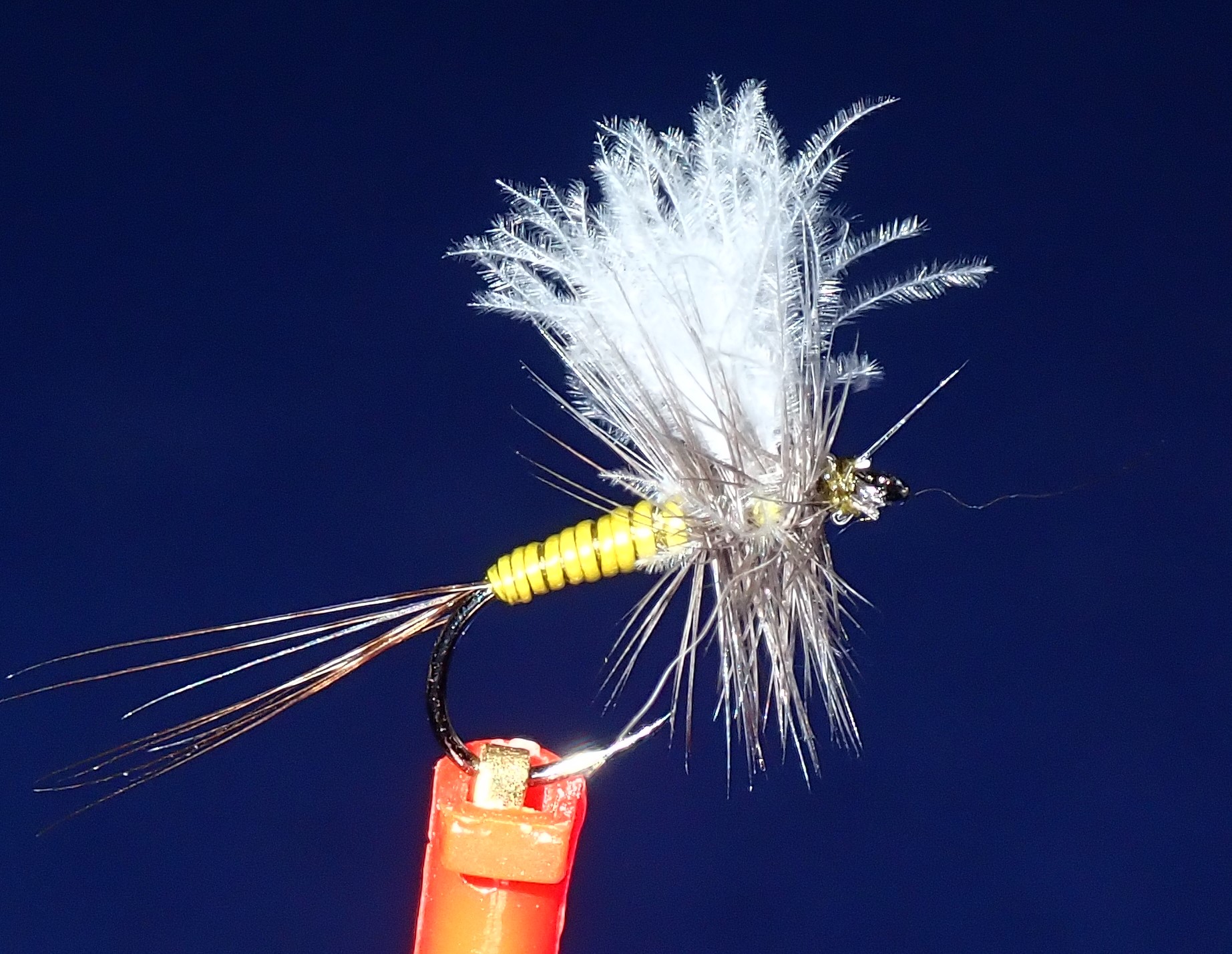
BWO Emerger
A Blue-Winged Olive emerger pattern with a slender olive body and CDC wing. BWO emergers are critical during spring and fall Baetis hatches, particularly on overcast days when these tiny mayflies hatch in incredible numbers. The Blue-Winged Olive hatch is one of the most important and consistent hatches on Montana's rivers, occurring reliably in spring and fall when overcast skies and cool temperatures trigger mass emergences of Baetis mayflies. During these hatches, trout feed with extraordinary selectivity, often refusing adult dun patterns in favor of the emerging insects trapped in the surface film. The BWO Emerger, with its slim olive body and CDC wing, is specifically designed for this scenario. The pattern's design places it right in the feeding zone that matters: the surface film. The CDC wing provides just enough buoyancy to keep the fly suspended at the meniscus while the slender olive body hangs below, mimicking a Baetis nymph in the act of emerging. CDC (cul de canard) feathers are the ideal material for this application because their natural oils repel water without artificial treatment, and their soft, web-like structure provides a lifelike impression of unfolding wings. On the Missouri, Bighorn, and spring creeks throughout Montana, this pattern is essential equipment during every BWO hatch.
Blue-Winged Olive CDC Emerger
The Blue-Winged Olive CDC Emerger is a deadly pattern designed to imitate the vulnerable transitional stage when Baetis mayflies are emerging from their nymphal shuck and breaking through the surface film. This critical moment in the mayfly lifecycle represents one of the most productive feeding opportunities for trout, and patterns that effectively mimic this stage often outperform both standard dry flies and subsurface nymphs during active hatches. Cul de Canard (CDC) feathers are the secret to this pattern's effectiveness. These unique feathers, taken from around a duck's preen gland, contain natural oils that make them extraordinarily buoyant and water-resistant. CDC creates a lifelike, translucent appearance in the surface film that perfectly mimics the wings of an emerging mayfly. The soft, mobile fibers also create subtle movement with even the slightest current, triggering strikes from selective trout. The BWO CDC Emerger excels during the peak of Blue-Winged Olive hatches, particularly when trout are feeding just subsurface on emerging nymphs rather than taking fully emerged duns. This often occurs during the initial stages of a hatch or in turbulent water where emergers struggle to break free from the surface. The pattern sits partially in and partially above the surface film, presenting a silhouette that trout find irresistible. Fishing this pattern requires delicate presentations with fine tippets (6X-7X) and careful attention to drag. The CDC emerger should be allowed to drift naturally without any tension on the leader. Strikes can be subtle—often just a slight hesitation in the fly's drift or a small dimple on the surface. During heavy BWO emergences on spring creeks and tailwaters from Oregon to Pennsylvania, this pattern can produce extraordinary results when nothing else works on ultra-selective trout.
Blue-Winged Olive Emerger
The Blue-Winged Olive Emerger is a versatile transitional pattern that bridges the gap between subsurface nymph and fully emerged dry fly. Designed to sit in or just below the surface film, this pattern imitates the critical moment when Baetis mayflies are transforming from nymphs to winged adults—a period of extreme vulnerability that trout exploit with focused feeding. What makes emerger patterns so effective is that they match the behavior trout actually observe during hatches. Research has shown that trout often feed more heavily on emergers than on either nymphs or fully emerged duns, particularly in smooth water where they can selectively target insects trapped in the surface tension. The BWO Emerger presents the segmented body of the nymph combined with the emerging wings, creating a silhouette that trout recognize instantly. This pattern excels during all phases of Blue-Winged Olive emergences, which occur throughout much of the year but peak in spring and fall. It's particularly effective during the middle stages of a hatch when the majority of insects are transitioning, and when weather conditions (cold, wind, or rain) slow the emergence process, causing insects to struggle in the film longer than usual. These are precisely the conditions when BWO hatches are most likely to occur. The BWO Emerger works across diverse water types—from the spring creeks of Pennsylvania to the tailwaters of Colorado and Wyoming. It can be fished alone on a fine tippet with careful presentations, or as a dropper below a buoyant dry fly indicator. The pattern's year-round utility makes it essential for anglers who fish technical waters where Baetis hatches provide consistent feeding opportunities even during winter months when other mayflies are absent.
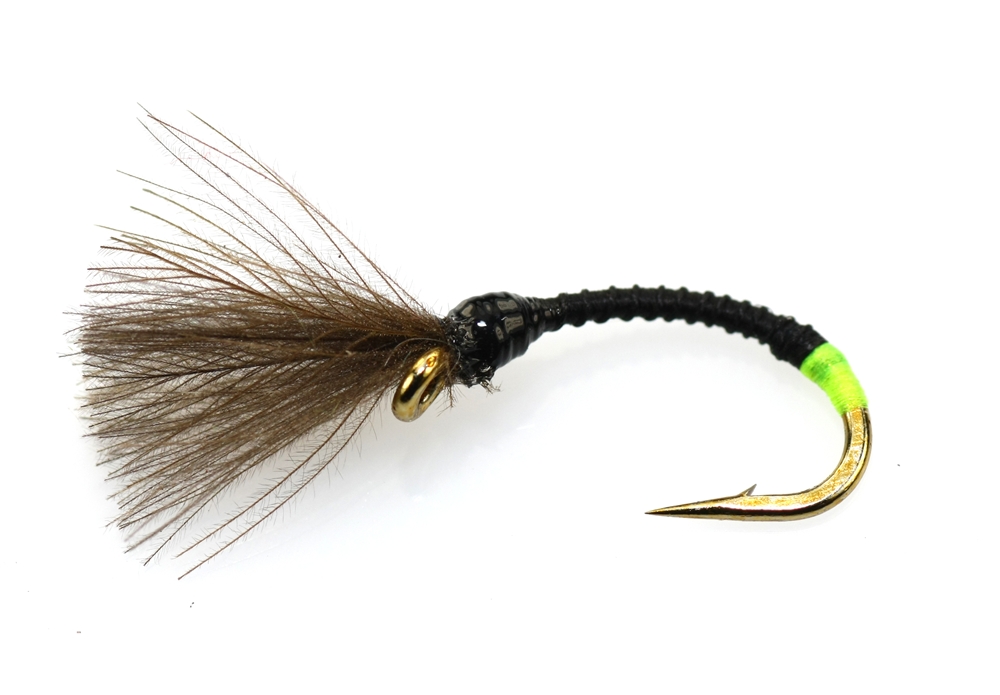
CDC Caddis Emerger
A soft-hackle style caddis emerger using CDC feathers for buoyancy and movement. Fish it in the film or just below during caddis hatches. The natural oils in CDC create a lifelike shimmer that trout find irresistible. The CDC Caddis Emerger bridges the gap between traditional soft-hackle wet flies and modern surface emerger patterns. Using CDC (cul de canard) feathers as the primary wing and hackle material, this pattern sits in or just below the surface film, perfectly imitating a caddis pupa ascending to the surface and beginning to shed its pupal shuck. The CDC fibers trap tiny air bubbles that give the fly a lifelike, shimmering quality, mimicking the gas bubble that natural caddis pupae use to propel themselves to the surface. On Montana's rivers, caddis emergers fill a critical niche during the prolific caddis hatches that occur from spring through fall. When trout are splashing at the surface during a caddis hatch but refusing adult patterns, they are often feeding on emerging pupae just below the film. The CDC Caddis Emerger presented in or just under the surface film is the solution. It is particularly effective on the Yellowstone during the Mother's Day caddis hatch, on the Madison during summer evening emergences, and on the Gallatin where caddis are a primary food source throughout the season.
Film Critic Emerger
The Film Critic is a deadly emerger pattern designed to imitate mayflies trapped in the surface film during the vulnerable transition from nymph to adult. Created by Wyoming guide Pat Dorsey, this pattern capitalizes on the fact that emerging mayflies often spend critical seconds suspended in the meniscus while their wings unfurl—a moment when they're helpless and highly visible to feeding trout. The Film Critic's low-floating profile and realistic silhouette make it devastatingly effective during mayfly hatches when trout focus on emergers rather than fully emerged duns. The pattern features a dubbed body that hangs below the surface film, a CDC wing that suggests the partially emerged wings, and a high-visibility foam post that allows anglers to track the fly while maintaining a realistic profile to the fish. This design perfectly mimics the natural emerger's posture in the water, with the nymphal shuck trailing below and emerging wings breaking through the surface. The pattern works for multiple mayfly species by varying size and color, including Green Drakes, Pale Morning Duns, and Blue-Winged Olives. Film Critic excels during selective feeding situations when trout refuse standard dry flies. During heavy hatches, trout often key on emergers because they're easier to capture than fully emerged adults that can fly away. The emerger's helpless position makes it a high-percentage target. This pattern's effectiveness is enhanced by fishing it dead-drift in the surface film, occasionally giving it a slight twitch to imitate the struggling insect. The pattern has proven effective across all Western waters, particularly in technical spring creeks and tailwaters where educated trout scrutinize their food carefully. South Platte River in Colorado, Wyoming's North Platte, Montana's Missouri River, Idaho's Silver Creek, and California's Hat Creek all see excellent Film Critic action. The pattern's versatility across mayfly species and sizes makes it an essential emerger selection for serious trout anglers fishing from spring through fall.
Krystal Flash Midge Emerger
The Krystal Flash Midge Emerger is a modern pattern designed to imitate midges in their most vulnerable stage—the transition from pupa to adult. During this critical moment, the emerging insect is trapped in the surface film, half-submerged, and completely helpless. Trout recognize this vulnerability and often feed selectively on emergers rather than fully emerged adults or subsurface pupae. What distinguishes this pattern from traditional midge emergers is the incorporation of Krystal Flash or similar reflective materials. This addition mimics the gas bubble and trapped air surrounding emerging midges, creating a subtle flash and sparkle that closely resembles the natural. The reflective fibers also suggest the wings beginning to unfurl from the pupal shuck—a visual trigger that selective trout find irresistible. Midges emerge year-round in most trout waters, making this pattern valuable in every season. However, it truly shines during winter and early spring on tailwaters and spring creeks, when midge hatches are the primary food source. The pattern is equally effective on stillwaters, where midge emergences can occur throughout the day, particularly in the morning and evening. The Krystal Flash Midge Emerger rides partially submerged in the surface film, exactly where emerging naturals are positioned. The body hangs below the surface while the wing post and flash materials extend slightly above, creating the perfect silhouette when viewed from below. This positioning makes it ideal for fishing to sipping rises and subtle surface takes that characterize midge-feeding behavior. Size selection is critical with this pattern. Match the natural midges as closely as possible, which often means fishing sizes 20-24 or even smaller. Color is also important—black, olive, gray, and red are the most common midge colors, though local variations exist. Carrying a selection in multiple sizes and colors ensures you can match whatever the trout are targeting.
RS2
Rim Chung's elegant emerger pattern imitates Baetis and midge emergers in the surface film. The RS2 is a year-round producer on the Missouri and Bighorn, where technical anglers target rising fish during midge and BWO hatches. The RS2, short for 'Rim's Semblance 2', is one of the most elegant and effective emerger patterns ever designed. Its sparse design features a beaver fur or Antron body, a split Micro Fibett tail, and a puff of CDC or web-like wing material that suggests the unfolding wings of an emerging mayfly or midge. The pattern sits in the surface film with its body submerged and its wing material visible above, creating a perfect silhouette of an insect caught in the act of hatching. On Montana's tailwater rivers, the RS2 is an essential pattern for technical dry fly and emerger fishing. During the prolific BWO and midge hatches on the Missouri and Bighorn rivers, trout often key on emergers trapped in the surface film rather than fully emerged adults. When you see trout rising with subtle, sipping rises but they refuse your dry flies, the RS2 is the answer. Fish it on 6X or 7X tippet with a drag-free drift, and prepare for the satisfaction of fooling highly selective tailwater trout on one of fly fishing's most refined patterns.
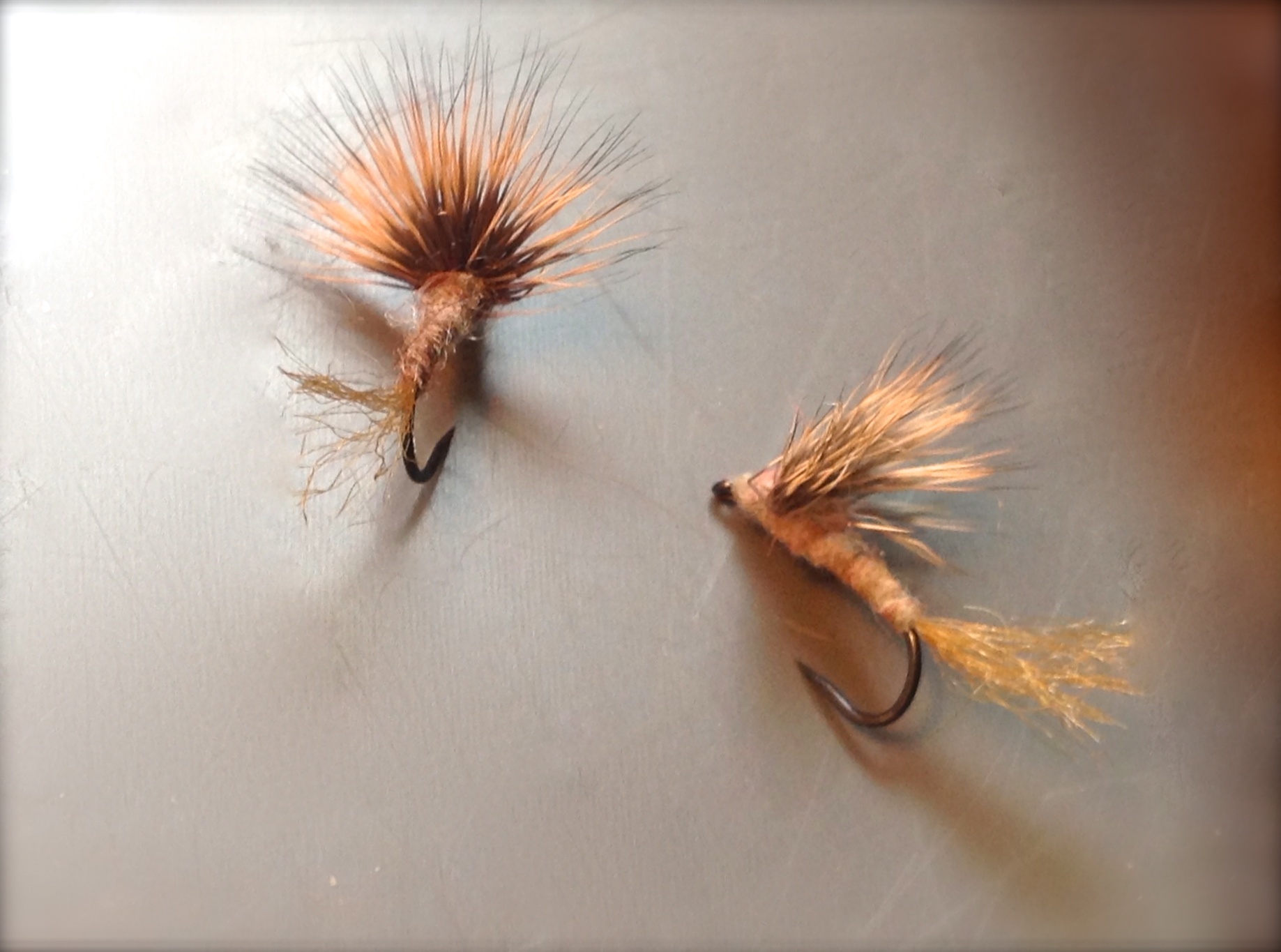
Sparkle Dun
Craig Mathews' emerger design sits in the film with a trailing Antron shuck, imitating a mayfly emerging from its nymphal shuck. Essential during PMD and BWO hatches when trout key on vulnerable emergers. The Sparkle Dun is one of the most important patterns to come out of the Yellowstone country fly fishing tradition. Craig Mathews designed it to fill the gap between a fully submerged emerger and a high-riding dun pattern. The result is a fly that sits in the surface film with a deer hair wing extending upward and a trailing Antron shuck dragging in the water behind, precisely imitating a mayfly that has broken through the surface and is shedding its nymphal exoskeleton. This is the moment when mayflies are most vulnerable, and it is the moment when trout feed most selectively. The Sparkle Dun has earned its place as a must-carry pattern on Montana's premier hatch-matching rivers. During PMD hatches on the Missouri and upper Madison, trout often ignore fully emerged duns in favor of the crippled and emerging insects caught in the film. The Sparkle Dun matches this stage perfectly. During BWO hatches in spring and fall, a size #18-20 olive Sparkle Dun can be the only pattern that produces when trout are locked into their feeding rhythm and refusing everything else.
WD-40
The WD-40 is one of the most effective and widely-used emerger patterns in modern fly fishing, particularly on technical tailwaters and spring creeks where trout feed selectively on tiny emerging insects. Created by Colorado guide John Barr in the 1990s, this deceptively simple pattern imitates both midge and small mayfly emergers with remarkable effectiveness. The fly's slender thread body, sparse dubbed thorax, and trailing shuck create a realistic profile of an insect trapped in the surface film—precisely when aquatic insects are most vulnerable to feeding trout. The WD-40's name comes from its material list: the fly originally required exactly 40 wraps of working thread to create the body, though most tiers now simply wrap to the appropriate length rather than counting. The pattern's genius lies in its minimalist design—a slim thread body suggests the segmented abdomen of emerging midges and mayflies, while the dubbed thorax and trailing shuck of Z-Lon or antron imitate the partially emerged insect struggling to shed its nymphal skin. This precise imitation of a critical life stage makes the WD-40 deadly when trout are feeding on emergers. The fly excels on tailwaters like Colorado's South Platte, the San Juan in New Mexico, and Montana's Missouri River, where dense midge and Baetis populations create year-round emergence activity. During winter, when midges are often the only insects active, the WD-40 in sizes 20-24 can be the difference between success and failure. The pattern works equally well during spring and fall Baetis hatches, when trout become incredibly selective to specific emergence stages. Even in summer, when larger insects are active, the WD-40 produces on pressured waters where fish have seen every standard pattern. Fishing the WD-40 requires technical skills—fine tippets (6X-7X), drag-free drifts, and the ability to detect subtle takes. The fly is typically fished in the surface film or just beneath, either as a standalone pattern or as a dropper beneath a small dry fly or indicator. Success depends on matching the hatch stage precisely: when trout are feeding on emergers, this pattern outperforms both nymphs and adult imitations. The WD-40 represents modern technical fly fishing at its finest—simple construction, precise imitation, and effectiveness that rewards skilled presentation.
Terrestrials(3)
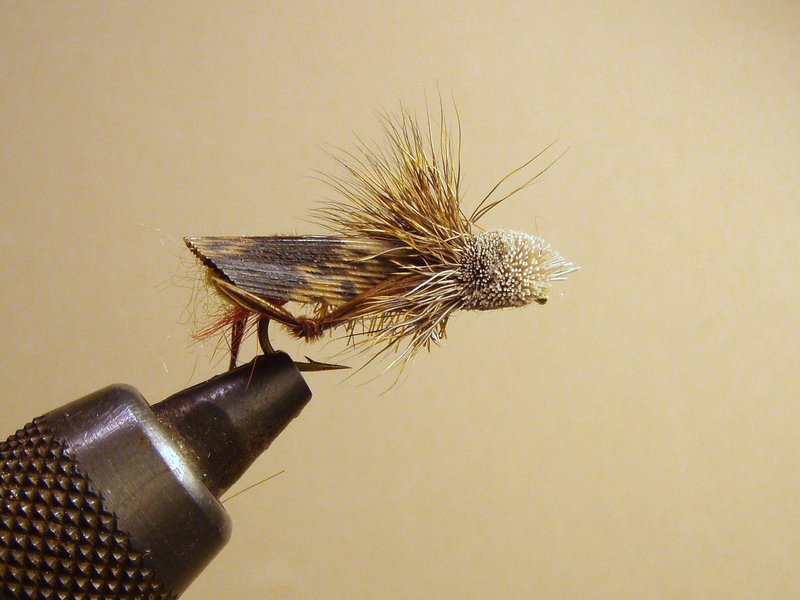
Dave's Hopper
Dave's Hopper stands as one of the most iconic and productive grasshopper imitations in fly fishing history. Created by Dave Whitlock in 1968, this pattern revolutionized terrestrial fly fishing with its realistic profile, high visibility, and exceptional floatability. The fly combines deer hair, turkey quill, and rubber legs to create a lifelike grasshopper silhouette that sits perfectly in the surface film. The pattern's effectiveness stems from its multi-dimensional appeal to trout. The deer hair head and collar provide excellent flotation while creating a realistic body shape. The turkey quill wing segments mimic the mottled appearance of a grasshopper's wings, and the rubber legs add crucial movement and lifelike action in the water. The yellow or tan body options allow anglers to match different grasshopper species found along trout streams. Dave's Hopper excels in late summer and early fall when grasshoppers are most abundant along stream banks. Trout become conditioned to feeding on these protein-rich terrestrials, often cruising near banks waiting for the next unfortunate hopper to fall into the water. The fly works best when cast tight to grassy banks, undercut areas, and overhanging vegetation where grasshoppers naturally live. This pattern has proven effective across all major trout waters in the United States, from Montana's spring creeks to Colorado's freestone rivers, Wyoming's mountain streams, and California's Sierra Nevada waters. Its versatility extends to both small streams where a size 12 works perfectly, and larger rivers where a size 6 or 8 creates an irresistible meal for trophy trout. The fly's high visibility also makes it an excellent choice for use as a dry fly indicator in hopper-dropper rigs, allowing anglers to fish a nymph below while still presenting an effective surface pattern.
Fat Albert
The Fat Albert is a burly, high-floating terrestrial pattern designed to imitate large grasshoppers and other substantial land-based insects. Created by fly fishing innovator Jack Dennis, this fly features a foam body that provides exceptional flotation, making it ideal for both direct presentation and as an indicator in hopper-dropper rigs. The Fat Albert's chunky profile and highly visible design make it a favorite during the late summer terrestrial season when trout actively feed on hoppers along stream banks. This pattern excels at imitating the larger grasshopper species that thrive in Western ranch country and meadow streams. When grasshoppers are abundant in late July through September, trout station themselves near grassy banks waiting for these meaty morsels to tumble into the water. The Fat Albert's substantial profile triggers aggressive strikes from trout that have become conditioned to feeding on hoppers, often producing explosive surface takes that make terrestrial fishing so exciting. The fly's foam construction offers several advantages beyond flotation. The closed-cell foam is virtually unsinkable, allowing anglers to fish the pattern through choppy riffles and turbulent pocket water where natural hoppers often land. The foam body also provides an excellent platform for rubber legs that create enticing movement even when the fly sits motionless. High-visibility colors like chartreuse or hot orange make the fly easy to track in broken water or low light conditions. Fat Albert works exceptionally well throughout the Rocky Mountain West, including Montana, Wyoming, Colorado, Idaho, and New Mexico waters where grasshoppers are abundant. It's equally effective in California's Sierra Nevada streams, Oregon's high desert rivers, and Washington's eastern slope waters. The pattern performs best when cast tight to grassy banks, under overhanging vegetation, and near cut banks where hoppers naturally fall. Many anglers use Fat Albert in sizes 8-10 as an indicator for nymph droppers, creating a deadly hopper-dropper combination that covers both surface and subsurface feeding zones.
Spruce Moth
The Spruce Moth is a distinctive terrestrial pattern designed to imitate the various moth species that populate forested areas surrounding trout streams. These soft-bodied insects become important trout food during summer and fall when moths emerge from forests and are blown or fall onto the water's surface. The pattern's unique construction, featuring peacock herl, badger hackle, and deer hair wings, creates a bushy, high-floating fly that suggests the fuzzy body and fluttering wings of natural moths. Moths are often overlooked as trout food compared to more famous terrestrials like grasshoppers and beetles, but they represent significant feeding opportunities, particularly on wilderness streams and in mountainous regions with extensive conifer forests. The spruce moth and similar species are most active during evening hours and on cloudy days, when they fly near water or rest on streamside vegetation. Wind, rain, or simple clumsiness causes them to land on the water, where they create disturbances that attract cruising trout. The Spruce Moth pattern excels in pocket water, along undercut banks, and beneath overhanging vegetation where terrestrials are most likely to fall. Its buoyant construction keeps it riding high even in turbulent water, and the deer hair wings provide excellent visibility for anglers tracking the fly through complex currents. The pattern works particularly well in the late afternoon and evening when natural moths are most active, though it can produce throughout the day during peak terrestrial season. This fly shines on forested mountain streams where spruce, pine, and fir forests border the water. Rivers flowing through Montana, Idaho, Wyoming, and Colorado wilderness areas see heavy moth activity, making the Spruce Moth an essential pattern for backcountry anglers. The pattern also works on larger rivers with wooded corridors, particularly during overcast conditions or after storms when wind blows terrestrials onto the water. Its effectiveness extends beyond strict moth imitation—the fly suggests various large, fuzzy terrestrials and can trigger opportunistic strikes from trout looking for substantial meals.
Wet Flies(2)
Soft Hackle Pheasant Tail
The Soft Hackle Pheasant Tail combines the proven effectiveness of Frank Sawyer's Pheasant Tail Nymph with the traditional soft hackle wet fly design that has caught trout for centuries. This hybrid pattern offers the best of both worlds—the realistic, buggy appearance of pheasant tail fibers with the lifelike movement of soft hackle that pulses and breathes in current. The result is an exceptionally versatile fly that imitates emerging mayflies, drowned adults, and various other aquatic insects in their vulnerable transitional stages. The pattern's effectiveness lies in its ability to imitate the emerger stage of mayfly hatches, when nymphs ascend toward the surface and begin transforming into adults. During this critical period, insects are trapped in the surface film or struggling to break free of their nymphal shucks, making them easy targets for feeding trout. The pheasant tail body suggests the natural coloration of many mayfly species, from Baetis to PMDs, while the soft hackle imitates the emerging wings and legs that create enticing movement. This fly excels when fished on the swing in riffles and runs, allowing current to impart natural movement to the hackle fibers. The traditional down-and-across presentation lets the fly swim through feeding lanes at the same depth and speed as natural emergers. Unlike dead-drifted nymphs, the swung soft hackle creates an active presentation that triggers aggressive strikes from trout. The pattern is equally effective when dead-drifted as a trailing fly in a multi-nymph rig, particularly during heavy mayfly emergences. Seasonal effectiveness spans spring through fall, whenever mayfly activity occurs. In spring, it imitates early season Baetis and March Browns. Summer brings diverse mayfly hatches from PMDs to Flavs, all of which the pattern can suggest with appropriate sizing. Fall sees continued mayfly activity, plus the pattern works well for drowned terrestrials and other insects blown into the water. The Soft Hackle Pheasant Tail's versatility makes it an essential pattern for anglers who want a single fly capable of covering multiple situations and insect species.
Soft Hackle Wet Fly
The Soft Hackle Wet Fly represents one of fly fishing's oldest and most effective pattern styles, with roots stretching back centuries to the streams of northern England and Scotland. These simple, elegant flies feature sparse bodies and soft, mobile hackles that create lifelike movement in current, imitating emerging caddis, drowned insects, and various aquatic life forms. The pattern's minimalist design belies its remarkable effectiveness—generations of anglers have discovered that trout often prefer these subtle, impressionistic flies over more elaborate imitations. What makes soft hackle flies so effective is their ability to suggest life and movement rather than provide exact imitation. The soft hackle fibers—typically from partridge, hen, or grouse—pulse and breathe with every current change, mimicking the struggling motion of emerging insects or the swimming action of small aquatic creatures. This movement is impossible to achieve with stiff rooster hackle or synthetic materials, making soft hackle flies uniquely appealing to feeding trout. The sparse body, often just silk thread or light dubbing, creates a slim profile that fish can see through, enhancing the illusion of a natural insect. Soft hackle flies excel when fished on the swing through riffles, runs, and pool tailouts. The traditional down-and-across presentation allows current to animate the hackle while moving the fly through feeding lanes at a natural speed. This technique is particularly deadly during caddis emergences, when pupae swim actively toward the surface and adult caddis skitter across the water. The fly also works well for drowned terrestrials, mayfly emergers, and opportunistic feeding situations where trout aren't locked into a specific insect. The pattern's versatility extends across seasons and water types. In spring, soft hackles imitate early caddis and mayfly emergences. Summer brings diverse hatches and terrestrial activity, both of which these flies can suggest. Fall fishing remains productive as insects continue emerging and trout feed aggressively before winter. The flies work in small mountain brooks, medium freestone rivers, and even some tailwaters, making them essential patterns for anglers who value simple, effective designs that have stood the test of time.